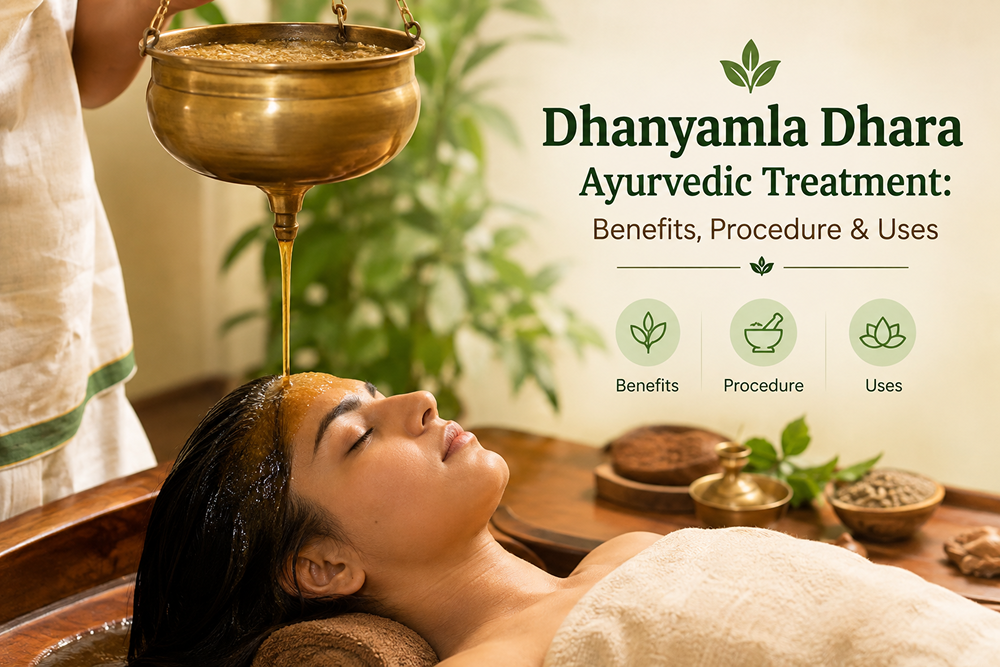
Introduction
Dhanyamla Dhara Ayurvedic therapy is a traditional Ayurvedic procedure in which a warm, fermented herbal liquid is poured over the body in a slow, continuous stream. It belongs to the family of Dhara treatments, external therapies built around the steady pouring of a medicated liquid, and is used mainly for joint stiffness, swelling, and vata-kapha-related discomfort. If you are exploring Ayurvedic therapy in Bangalore for chronic joint or muscular concerns, understanding what this treatment involves, how it is performed, and what it can realistically help with will make it easier to have an informed conversation with a qualified Ayurvedic physician.
What Is Dhanyamla Dhara?
The word “Dhanyamla” combines dhanya (grains or cereals) and amla (sour, fermented). “Dhara” refers to a continuous stream of pouring. Put together, Dhanyamla is a sour, aromatic liquid prepared by fermenting grains – typically rice, horse gram, and related cereals – along with warming spices such as ginger, lemon, and other traditional ingredients. This liquid is not an oil; it is sometimes loosely called Dhanyamla Dhara oil therapy because it is used similarly to oil-based Dhara treatments, but the medium itself is a fermented grain-based liquid rather than an oil.
In classical Ayurvedic texts, Dhanyamla is described as having a cooling touch combined with a heating potency, which is considered useful in pacifying aggravated vata and kapha doshas. This is a traditional Ayurvedic concept rather than a biomedical mechanism, and it should be understood in that context.
How the Dhanyamla Dhara Procedure Works
While exact steps vary slightly between clinics, the general procedure followed in most Ayurvedic centres includes:
Preparation
The patient is made comfortable on a treatment table (dhroni), and the affected area or the whole body, depending on the condition, is assessed by the physician before the session.
Warming the liquid
The Dhanyamla is gently heated to a therapeutic, tolerable temperature and checked manually by the therapist before use.
Pouring (Dhara)
Two therapists typically stand on either side of the table and pour the warm liquid in a steady, uninterrupted stream over the affected joints or the entire body, often while the patient is guided through a few different positions to ensure even coverage.
Duration
A typical session may run for around 30 to 45 minutes, though this is decided by the treating physician based on the individual’s condition.
Post-procedure care
After the pouring is complete, the liquid is wiped off, and the patient is usually advised to rest briefly before resuming normal activity.
This is a professionally supervised clinical procedure and should only be performed under the guidance of a qualified Ayurvedic doctor, not attempted at home.
Dhanyamla Benefits
Within Ayurvedic practice, Dhanyamla Dhara is traditionally used to support:
- Joint stiffness and swelling – particularly in conditions associated with kapha-vata aggravation, where mobility and comfort are affected.
- Musculoskeletal discomfort – including generalised stiffness, reduced flexibility and localised soreness.
- Post-exertion or overuse-related strain – where warmth and gentle liquid pressure are used to ease tightness.
- General circulation and warmth to the area – the sustained warm pouring is believed to support local blood flow, though this should be understood as a traditional explanation rather than a clinically established mechanism.
It’s worth being clear-eyed here: while Dhanyamla and related grain-fermentation liquids have been studied in a limited number of small Ayurvedic research settings for conditions such as inflammatory joint disorders, the evidence base is still developing and is nowhere near as extensive as that for conventional treatments. Ayurvedic therapy should be seen as a complementary or supportive approach for chronic, non-emergency conditions, not a replacement for necessary conventional medical care – especially in cases involving acute injury, infection, or rapidly worsening symptoms.
Who This Therapy May Be Suitable For
Dhanyamla Dhara is generally considered for people dealing with chronic joint stiffness, recurring muscular tightness, or ongoing discomfort linked to vata-kapha imbalance as assessed by an Ayurvedic physician. It is typically not a first-line option for acute fractures, active infections, open wounds, or conditions requiring urgent medical attention. A physician will usually take a detailed history, examine the affected area, and confirm whether this therapy – sometimes combined with other Panchakarma procedures – is appropriate for your specific situation before starting treatment.
Why Consult a Qualified Physician Before Starting
Ayurvedic therapies, including Dhanyamla Dhara, are prepared and administered based on an individual’s constitution (prakriti) and the nature of their imbalance. The temperature of the liquid, the duration of the pour, and the areas treated all need to be adjusted per patient. This is why it’s important to consult an experienced Ayurvedic doctor rather than a general wellness centre, particularly if you have an existing medical condition, are pregnant, or are already under treatment elsewhere. If your symptoms are severe, sudden, or getting worse, please see an appropriately qualified healthcare professional promptly rather than relying solely on Ayurvedic therapy.
Finding the Right Ayurvedic Clinic in Bangalore
If you are looking for an Ayurvedic clinic in Bangalore that offers Dhanyamla Dhara and related Panchakarma treatments, it helps to choose a centre with qualified BAMS-trained physicians, transparent treatment protocols, and clear communication about what a therapy can and cannot address. A good Ayurvedic treatment in Bangalore should always begin with a proper consultation and assessment – not a standard package applied to every patient.
Conclusion
Dhanyamla Dhara Ayurvedic therapy is a traditional, physician-guided treatment that uses a warm, fermented herbal liquid to help ease joint stiffness and musculoskeletal discomfort. It can be a useful part of an Ayurvedic care plan for chronic, non-emergency conditions, but it works best when recommended and supervised by a qualified Ayurvedic doctor after a proper assessment. If you are considering this therapy, book a consultation with an experienced Ayurvedic doctor in Bangalore to understand whether it’s suitable for your specific health concern.