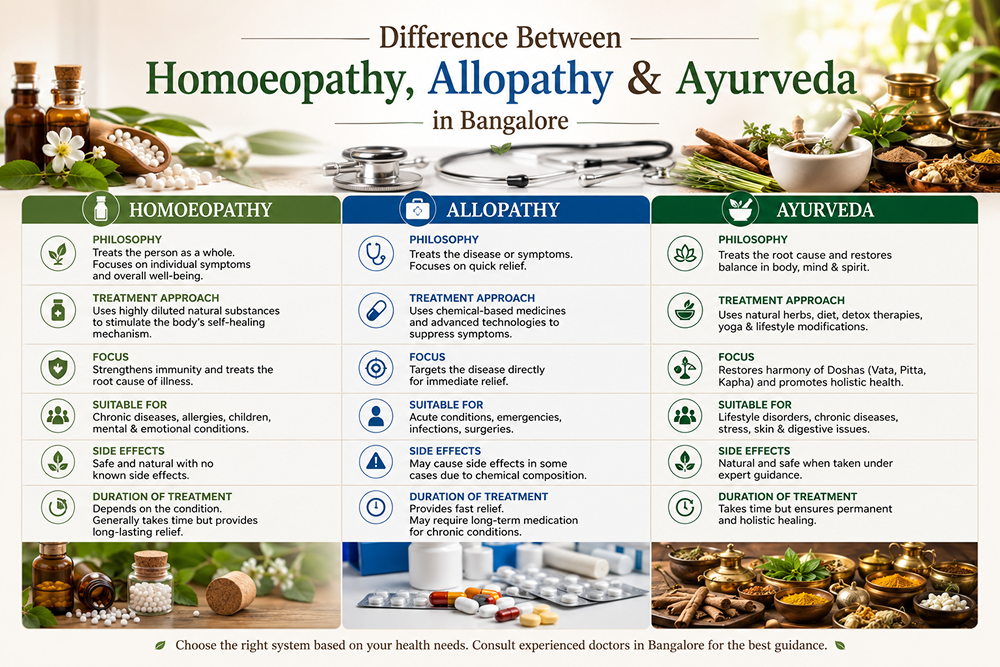
Choosing the right healthcare system can be overwhelming when multiple treatment options are available. Many people search for homoeopathy vs allopathy vs ayurveda to understand how these systems differ and which one best suits their health needs. Whether you are exploring Ayurvedic treatment near me, looking for the Best Ayurvedic doctor in Bangalore, or simply trying to understand the strengths of Homeopathy, Allopathy, and Ayurveda, this guide explains their principles, treatment methods, benefits, and key differences. By understanding each approach, you can make informed decisions about your healthcare with professional medical guidance.
Understanding the Three Healthcare Systems
India is home to several recognised systems of medicine, each with its own philosophy, diagnostic methods, and treatment approaches. Among the most widely known are Homoeopathy, Allopathy, and Ayurveda.
Although all three aim to improve health and well-being, they differ in their origins, principles, and methods of treatment. Understanding these differences can help patients choose the approach that best aligns with their health condition, personal preferences, and medical advice.
What is Homoeopathy?
Homoeopathy is a system of medicine developed in the late 18th century by the German physician Dr. Samuel Hahnemann. It is based on the principle of “like cures like,” meaning that a substance capable of producing certain symptoms in a healthy person may be used in highly diluted form to address similar symptoms in an unwell person.
Homoeopathy emphasizes individualised treatment. Practitioners consider not only physical symptoms but also emotional and mental characteristics before recommending remedies.
Treatment generally involves highly diluted preparations selected according to the individual’s overall symptom profile rather than focusing solely on a specific disease.
Many people choose Homeopathy because of its personalised consultation process and holistic approach to patient care.
What is Allopathy?
Allopathy, commonly referred to as conventional or modern medicine, is the most widely practiced healthcare system across the world. It relies on scientific research, clinical evidence, diagnostic testing, and evidence-based medical treatments to diagnose, manage, and treat diseases.
Allopathic care includes:
- Clinical examinations
- Laboratory investigations
- Imaging techniques
- Prescription medications
- Surgical procedures
- Preventive healthcare services
- Emergency medical care
Modern medicine plays an essential role in managing acute illnesses, infections, trauma, emergencies, and many chronic diseases through continuously evolving scientific research.
For medical emergencies, severe infections, accidents, and life-threatening conditions, prompt allopathic medical care is essential.
What is Ayurveda?
Ayurveda is one of the world’s oldest holistic healthcare systems, with a history spanning thousands of years. The word Ayurveda means “the science of life” and focuses on maintaining harmony between the body, mind, and spirit.
According to Ayurveda, every individual has a unique body constitution known as Prakriti, which is influenced by three biological energies:
- Vata
- Pitta
- Kapha
Health is maintained when these three doshas remain balanced. Ayurvedic care aims to restore this balance through personalised nutrition, lifestyle guidance, herbal formulations, yoga, meditation, and therapies such as Panchakarma therapy Bangalore.
Unlike symptom-focused treatment alone, Ayurveda emphasises preventive healthcare, healthy daily routines, and long-term wellness.
Difference Between Homoeopathy, Allopathy, and Ayurveda
Although the three systems share the common objective of improving health, they differ significantly in philosophy, diagnosis, and treatment methods.
| Feature | Homoeopathy | Allopathy | Ayurveda |
| Origin | Germany | Modern scientific medicine | Ancient India |
| Philosophy | Like cures like | Evidence-based diagnosis and treatment | Balance of Vata, Pitta, and Kapha |
| Diagnosis | Individual symptom analysis | Clinical evaluation, tests, imaging | Body constitution, pulse, lifestyle, digestion |
| Treatment | Highly diluted remedies | Medicines, surgery, medical procedures | Herbal formulations, nutrition, lifestyle, Panchakarma |
| Primary Focus | Individualised symptom profile | Disease diagnosis and management | Preventive healthcare and holistic wellness |
| Lifestyle Guidance | Limited | General health advice | Extensive diet and lifestyle recommendations |
| Preventive Care | Moderate | Vaccination and screening | Strong emphasis on prevention and healthy living |
Each healthcare system has its own strengths, and the most appropriate approach depends on the individual’s health condition and professional medical advice.
Difference Between Homoeopathy, Allopathy, and Ayurveda Treatment Methods
Understanding the treatment philosophy behind each system helps explain why their recommendations often differ.
Homoeopathy
Homoeopathy focuses on selecting remedies based on an individual’s complete symptom profile. Practitioners typically spend considerable time understanding physical, emotional, and mental symptoms before prescribing treatment.
The emphasis is on individualisation rather than treating everyone with the same diagnosis identically.
Allopathy
Allopathic medicine follows evidence-based clinical guidelines developed through extensive scientific research. Diagnosis usually involves physical examination, laboratory investigations, imaging, and established treatment protocols.
Treatment may include:
- Prescription medications
- Physiotherapy
- Medical procedures
- Surgery
- Preventive healthcare
- Vaccination
- Rehabilitation
Ayurveda
Ayurveda begins by understanding the patient’s body constitution, digestion, lifestyle, sleep, diet, emotional well-being, and environmental influences.
Treatment plans may include:
- Personalised herbal formulations
- Dietary recommendations
- Lifestyle modifications
- Yoga and breathing exercises
- Meditation
- Panchakarma therapy Bangalore
- Seasonal wellness practices
Ayurveda focuses on identifying and addressing underlying imbalances while promoting long-term health and preventive care.
Benefits of Homoeopathy, Allopathy, and Ayurveda
Each healthcare system offers unique benefits depending on the individual’s health needs.
Benefits of Homoeopathy
Homoeopathy is known for its personalised consultation process and individualised treatment philosophy. Practitioners consider the whole person rather than focusing only on isolated symptoms.
Benefits of Allopathy
Modern medicine provides rapid diagnosis through advanced technology and is highly effective in emergency care, surgery, trauma management, infectious diseases, and evidence-based treatment of many medical conditions.
Benefits of Ayurveda
Ayurveda offers a holistic approach that combines nutrition, healthy routines, herbal formulations, stress management, yoga, meditation, and preventive healthcare.
Its key strengths include:
- Personalised healthcare
- Long-term wellness focus
- Lifestyle and nutritional guidance
- Preventive healthcare
- Holistic management of overall health
- Individualised treatment plans
Which Is Best: Allopathy, Homoeopathy, or Ayurveda?
One of the most common questions patients ask is:
“Which is best: allopathy or homoeopathy or ayurveda?”
There is no universal answer because each healthcare system serves different purposes.
Allopathy is indispensable for emergency medicine, surgeries, trauma care, severe infections, and many evidence-based medical treatments.
Homoeopathy emphasises individualised consultations and symptom-based remedy selection according to its own therapeutic principles.
Ayurveda focuses on preventive healthcare, personalised nutrition, healthy lifestyle practices, and maintaining long-term balance within the body through holistic care.
The best choice depends on factors such as your health condition, treatment goals, medical history, and guidance from qualified healthcare professionals.
Many individuals seeking long-term wellness, healthy lifestyle guidance, and preventive care choose Ayurveda as part of their overall healthcare journey, while also using conventional medical care whenever appropriate.
Why Ayurveda Continues to Gain Popularity
As awareness of holistic healthcare grows, more people are exploring Natural medicine and traditional wellness systems that emphasise prevention and healthy living.
Ayurveda has gained increasing recognition because it encourages individuals to actively participate in maintaining their own health through:
- Balanced nutrition
- Healthy daily routines
- Stress management
- Regular physical activity
- Seasonal wellness practices
- Individualised healthcare plans
Rather than treating every patient identically, Ayurveda recognises that every person’s constitution and lifestyle are unique.
This personalised philosophy makes Ayurveda an attractive option for individuals looking to support their long-term health and overall well-being.
Ayurveda vs Homoeopathy for Immunity
One of the most searched comparisons is Ayurveda vs Homoeopathy for immunity. Both systems aim to promote overall health, but they approach immunity from different perspectives.
In Ayurveda, immunity is associated with the concept of Ojas, which represents the body’s vitality, resilience, and natural strength. Rather than focusing on a single remedy, Ayurveda encourages a comprehensive lifestyle that includes balanced nutrition, proper digestion, healthy sleep, stress management, regular exercise, and seasonal routines. Depending on an individual’s constitution, an Ayurvedic practitioner may also recommend personalised herbal formulations and wellness therapies.
Homoeopathy approaches health through remedies selected according to an individual’s overall symptom profile and constitutional assessment. Treatment is highly individualised, with practitioners considering physical, emotional, and mental characteristics before recommending remedies.
Both systems emphasise personalised care, but Ayurveda places a strong focus on lifestyle, nutrition, and preventive health practices to support long-term wellness.
Ayurveda vs Allopathy for Long-Term Wellness
Another common question is how Ayurveda vs Allopathy for long-term wellness compares.
Allopathy plays a vital role in diagnosing, managing, and treating diseases using evidence-based medicine. It is essential for emergencies, infections, surgery, trauma care, and many chronic medical conditions.
Ayurveda complements long-term wellness by encouraging healthy daily routines, balanced nutrition, stress management, regular physical activity, and personalised healthcare plans. Rather than focusing solely on disease management, Ayurveda promotes habits that help maintain overall balance and well-being.
Many people choose Ayurveda as part of a healthy lifestyle while continuing to follow conventional medical advice whenever necessary.
Preventive healthcare is one of Ayurveda’s greatest strengths, encouraging individuals to maintain wellness before illness develops.
Homoeopathy vs Ayurveda for Skin Disorders
When comparing Homoeopathy vs Ayurveda for skin disorders, it is important to understand that both systems follow different philosophies.
Homoeopathy selects remedies according to an individual’s symptom profile and constitutional characteristics.
Ayurveda evaluates factors such as body constitution (Prakriti), digestion (Agni), dietary habits, lifestyle, and overall balance before developing a personalised wellness plan. Healthy nutrition, daily routines, and herbal formulations are often included as part of Ayurvedic care.
Because skin concerns can have many underlying causes, consulting qualified healthcare professionals is essential to determine the most appropriate treatment approach.
Persistent or severe skin conditions should always be properly evaluated by a qualified medical professional.
Why Choose an Ayurveda & Siddha Hospital in Bangalore?
Bangalore has become a leading destination for holistic healthcare, with many people seeking personalised treatment that combines traditional knowledge with professional clinical care.
Choosing an Ayurveda & Siddha hospital in Bangalore offers several advantages:
- Qualified Ayurvedic practitioners
- Personalised consultations
- Individualised treatment plans
- Traditional therapies performed under professional supervision
- Nutritional and lifestyle guidance
- Holistic approach to overall well-being
If you are searching for the Best Ayurveda hospital in Bangalore or an Ayurvedic treatment near me, selecting an experienced healthcare provider ensures that your treatment plan is tailored to your individual health goals.
Panchakarma Therapy Bangalore
One of the most recognised Ayurvedic therapies is Panchakarma therapy Bangalore, a structured programme designed according to classical Ayurvedic principles.
Panchakarma consists of multiple stages that may include preparation, therapeutic procedures, and post-treatment care. Each programme is customised according to the individual’s body constitution, health status, and wellness objectives.
Potential wellness benefits include:
- Supporting the body’s natural cleansing processes
- Promoting digestive balance
- Encouraging relaxation
- Supporting healthy lifestyle changes
- Enhancing overall vitality
Panchakarma therapy should always be performed under the supervision of qualified Ayurvedic practitioners following an individual assessment.
Why Choose Ayurhealing?
At Ayurhealing, we are committed to providing personalised healthcare based on authentic Ayurvedic principles. Every individual receives a comprehensive consultation that considers body constitution, lifestyle, nutrition, health history, and wellness goals before a treatment plan is recommended.
Patients choose Ayurhealing because we offer:
- Experienced Best Ayurvedic doctor in Bangalore
- Personalised Ayurvedic consultations
- Traditional therapies delivered by trained professionals
- Holistic wellness programmes
- Preventive healthcare guidance
- Individualised nutrition and lifestyle counselling
- Patient-centred approach focused on long-term wellness
Whether you are searching for an Ayurvedic treatment near me or looking for a trusted Best Ayurveda hospital in Bangalore, our team is dedicated to helping you achieve better health through personalised Ayurvedic care.
Choosing the Right Healthcare System
There is no single healthcare system that is universally better for every individual or every health condition.
When deciding between Homoeopathy, Allopathy, and Ayurveda, consider:
- Your current health condition
- Medical history
- Treatment goals
- Severity of symptoms
- Professional medical advice
- Personal preferences
Many individuals use different healthcare systems at different times depending on their specific needs. Always consult qualified healthcare professionals before making treatment decisions.
The most effective healthcare is personalised, evidence-informed, and appropriate for your individual circumstances.
Conclusion
Understanding the Difference Between Homoeopathy, Allopathy, and Ayurveda in Bangalore allows you to make informed healthcare decisions based on your unique health needs.
While Allopathy remains the cornerstone of emergency medicine and evidence-based disease management, Homoeopathy focuses on individualised remedy selection according to its therapeutic principles. Ayurveda emphasises preventive healthcare, personalised nutrition, healthy lifestyle practices, and long-term wellness through holistic care.
If you are looking for an experienced Best Ayurvedic doctor in Bangalore, a trusted Ayurveda & Siddha hospital Bangalore, or an Ayurvedic treatment near me, Ayurhealing offers personalised consultations and holistic treatment plans designed to support your overall well-being.
Choosing the right healthcare system begins with understanding your health goals and consulting experienced professionals who can guide you toward the most appropriate approach.