An important feature of ancient medicinal systems is that they treat an individual as a whole, not just the disease. Then, the treatment is fine-tuned based on the individual’s state of body. Other conditions include susceptibility to diseases, mental strength, and lifestyle-related factors. The Prakriti concept in Ayurveda is a very powerful concept. This article will give a brief introduction to Prakriti and the diet to be followed.
What is Prakriti?
The word prakriti represents “nature” or the natural form of the constitution and build of the human body. It is derived from two words- Pra, meaning the “beginning”, and kruthi, meaning “to perform”. Put together, it means the natural form. Disease occurs whenever there is a change in this natural form, either at the physiological or psychological level. Ayurveda focuses on examining this prakriti (ie, the natural state of the individual. Then, the disease Vikruthi will be examined. Modern medicine experts analyze the disease, while an Ayurvedic expert will be interested to know about the individual’s natural body condition.
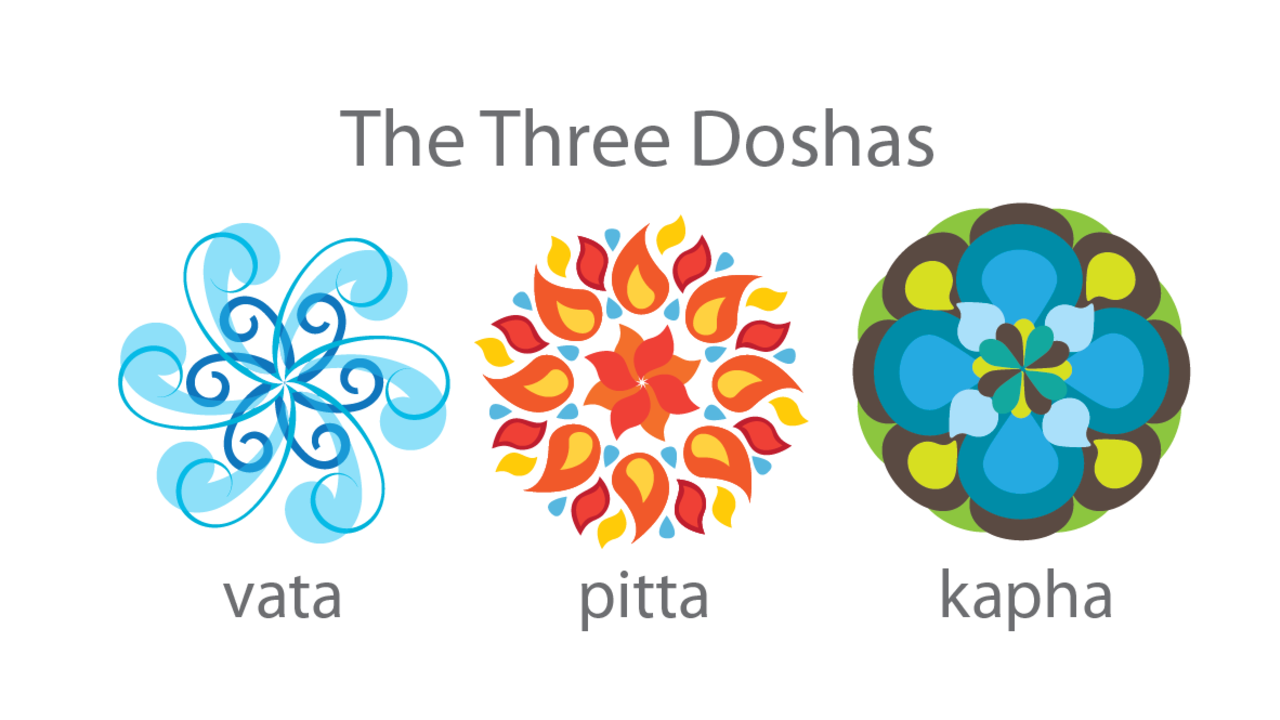
Ayurveda sees all illnesses or diseases based on three basic elements called doshas – vata, pitta, and kapha. An imbalance of any of these will result in a disease. Vata is responsible for the respiration and movement control. Pitta maintains the body heat, and Kapha maintains the body form and structure. Kapha dosha comprises Jala and Prithvi, Pitta has Tejas, and finally Vata is made of Akasha and Vayu.
Qualities of each Prakrithi:
A brief description of each type of prakriti is given below. These qualities can be found in every individual’s personality. All beings in the universe are composed of 5 basic elements – namely Vaayu, Akaasha, Jala Teja, and Prithvi.
Vata prakriti
Vata represents dry, mobile, light, expansible, cold, quick, clear, rough, and a bit astringent
in taste. Vata individuals are lightly built, have dry and rough skin, are very quick in mental
processes, and take the initiative in actions. Vata is usually manifested as dry skin with a thin structure or a lean body. The
nails, hair, eyes, and teeth appear dry. Voice is low, weak, hoarse, and crackling. Vata individuals are hyperactive and can work with less sleep. Due to the quick action, the person will show newer initiatives at work. But the dry quality makes them lose strength and get tired soon.
Pitta prakriti
Pitta is usually hot, liquid, slightly foul-smelling, sour, and pungent in taste. So, pitta Individuals sweat a lot and have a higher body temperature than normal individuals. These individuals have a higher metabolic rate, they drink and eat a lot, and are very often thirsty. They have moles or skin eruptions. They have scanty and soft hair and tend to be
grey and bald prematurely. They can’t bear a minimum amount of heat. They get provoked
easily and are upset about it. The fluid nature makes the muscles and joints, the body parts, very soft and flabby. Their higher metabolic rate leads to excess excretion and perspiration. The foul smell tends to give a strong body odour to them.
Kapha prakriti
Kapha is unctuous, smooth, sweet in taste, dense, soft, rigid, stable, and slow. Kapha individuals have soft limbs, a slower gait, and are usually slow to understand. This cold Quality implies that their digestive power or agni is low.
Kapha individuals possess unctuous, soft, and oily skin. The steady and stable quality endows a well-built, steady body. The dense nature of Kapha provides fullness to the organs and body. They are usually slow in their activities. They have strong perseverance and are also emotionally very mild.
Prakriti and Ayurvedic diet conditions:
Everyone cannot eat the same thing. The Prakriti they have helps in deciding the appropriate dietary requirement for them. Patients have to modify their regular food intake if needed. In general, individuals with vata prakriti should take warm, unctuous, and sweet substances. Pitta prakriti individuals should take heavy, cool, bitter, sweet, and astringent food articles. Kapha prakriti individuals should consume warm, dry, light, bitter, pungent, and astringent food items.
Ayurvedic dietary suggestions for vata-pitta,pitta-kapha, and kapha-vata type individuals usually follow a common sense approach. They need to make small changes in their food choices and eating habits. A wholesome diet that includes all the food groups is very important. Also, there are guidelines on foods and beverages that should be avoided or limited. These are recommended based on the unique properties of the dominant dosha of the individual and analysis of the properties of foods. Because the food intake directly influences the doshas and thus results in illness.
The best way to start a day is to have a cup of herbal tea. Use the herbs that pacify the dominant doshas. Some of the herbs include guduchi,shatavari, and vidari. Before consuming any of these, consult an expert Ayurvedic doctor for the same. Dr. Mini Nair from Ayurhealing has years of experience in treating dosha-related imbalances and diseases.
Ayurvedic treatment for vata, pita,kapha
Ayurvedic herbs are commonly used to cure a large variety of health problems. These herbs also play an important role in maintaining a proper health. Ayurvedic herbal products are more effective in treating the dosha imbalances. Ayurvedic herbs are usually classified based on their tastes, therapeutic properties, and other qualities that represent the doshas. Some of the most effective herbs for balancing and pacifying a vata-pitta-kapha
The constituents are Brahmi, Chamomile, Cinnamon, and Ashwagandha. A lot more herbs are
available at Ayurhealing, one of the best Ayurvedic hospitals in Bangalore.
How to balance Vata, Pita, and Kapha
No matter what your dosha type is, Ayurveda provides a lot of recommendations to help
balance them. Make it a daily routine to have a diet that keeps the doshas balanced. Yoga
activities are also effective in preserving the optimal balance of the doshas. As a vata-pitta-kapha type, one is advised to opt for foods which are served at room temperature, i.e, not so hot or cold. If there is vata or kapha aggravation, have foods that are served hot. If there is pitta aggravation, increase intake of cool foods or the ones served at room temperature.