
How to Choose an Ayurvedic Hospital in Bangalore

Key Takeaways

  • Choose qualified practitioners: Check the doctor’s qualifications, registration, experience, and approach to patient care.
  • Look beyond treatment claims: Evaluate consultation quality, hygiene, treatment facilities, and follow-up support.
  • Match treatment to your needs: Back pain, hair fall, vitiligo, and ulcers require appropriate assessment rather than a one-size-fits-all approach.
  • Understand the full cost: Ask for a written treatment plan and a clear breakdown of consultation, therapy, medicines, and follow-up charges.
  • Prioritise safety and transparency: A responsible Ayurvedic hospital explains potential risks, expected outcomes, limitations, and when conventional medical care is needed.
AEO QUICK TAKE

How Do You Choose an Ayurvedic Hospital in Bangalore?

Choose an Ayurvedic Hospital in Bangalore by checking doctor qualifications, treatment options, hygiene, costs, and follow-up care. Look for personalised treatment plans, transparent communication, and realistic outcomes rather than guaranteed cure claims.

How to Choose an Ayurvedic Hospital in Bangalore

A step-by-step decision framework

1. Verify credentials

Qualifications, registration and relevant experience

2. Assess your needs

Symptoms, medical history and individual care

3. Check safety

Hygiene, treatment risks and medicine interactions

4. Compare costs

Consultation, therapies, medicines and follow-ups

Make an informed decision

Choose a qualified provider with transparent advice and realistic treatment expectations.

The Decision Every Patient Faces

Imagine you have been experiencing recurring back pain, persistent hair fall, or a health concern that has not improved as expected. You begin exploring Ayurveda because you are interested in a more personalised approach to health and wellbeing.

A quick search for an Ayurvedic Hospital in Bangalore brings up numerous options. Some emphasise traditional therapies, others promote specialised treatments, and many highlight patient testimonials or wellness programmes.

But how do you determine which facility is appropriate for you?

The answer is not simply to choose the hospital with the most advertisements, the lowest prices, or the strongest claims. Your decision should be based on the quality of the medical assessment, the practitioner’s credentials, the suitability of the proposed treatment, and the facility’s commitment to patient safety.

Ayurveda includes a range of traditional approaches to health, diet, lifestyle, and therapeutic care. However, the evidence supporting specific Ayurvedic treatments varies by condition. A responsible provider should help you understand these differences rather than presenting every treatment as suitable for everyone.

The central principle is simple: choose a healthcare provider that understands your individual needs, explains its recommendations clearly, and places your safety above promises.

What Makes a Good Ayurvedic Hospital?

A good Ayurvedic hospital combines qualified practitioners, appropriate treatment facilities, transparent communication, and individualised care.

Before booking an appointment, evaluate the following five areas.

Evaluation factorWhat to look for
Medical expertiseQualified and appropriately registered Ayurvedic practitioners
Personalised assessmentReview of symptoms, medical history, current medication, and health goals
Treatment suitabilityA clear explanation of the proposed therapy and its limitations
Safety and hygieneClean consultation rooms, therapy areas, and appropriate procedures
Continuity of careDocumented recommendations, follow-up appointments, and referral when necessary

These factors matter because the quality of your experience depends on more than the treatment itself. It also depends on whether the practitioner has understood your condition, considered other medical needs, and established a suitable plan.

Why personalised assessment matters

Two people may report the same symptom but have different underlying causes. For example, back pain may be associated with muscle strain, joint problems, nerve compression, or another medical condition.

A thorough consultation should explore your symptoms and relevant medical history before treatment is recommended. Where necessary, the practitioner should advise diagnostic tests or assessment by another healthcare professional.

Be cautious if a facility recommends a lengthy package before examining you or claims that one treatment works equally well for every patient.

How to Evaluate an Ayurvedic Doctor

The doctor you consult can significantly influence your treatment experience. When searching for the Best Ayurvedic Doctor in Bangalore, focus on verifiable qualifications, relevant experience, communication, and professional judgement rather than promotional rankings alone.

Check qualifications and registration

Ask about the practitioner’s recognised Ayurvedic medical qualification, registration with the appropriate state or national professional register, and experience treating your particular concern.

You can also check whether the hospital has the registrations or licences applicable to its services and location.

Evaluate the consultation process

A responsible doctor should ask about your symptoms, how long they have been present, previous treatments, allergies, ongoing medication, and relevant medical conditions.

They should explain the proposed approach in language you understand and give you an opportunity to ask questions.

Look for realistic recommendations

No ethical practitioner can guarantee the outcome of every treatment. The likely benefits depend on the condition, its severity, individual circumstances, and the available evidence.

A trustworthy doctor discusses uncertainty honestly and recommends referral or additional investigation when appropriate.

Practical tip: Prepare a list of your symptoms, previous reports, and current medicines before your first consultation. This helps the doctor assess your needs more effectively.

Match the Treatment to Your Health Concern

Not every Ayurvedic therapy is appropriate for every condition. A useful next step is to ask whether the hospital has experience with your concern and how it determines which treatments may be suitable.

Ayurvedic Treatment for Back Pain in Bangalore

People exploring Ayurvedic Treatment for Back Pain in Bangalore should first understand what may be causing their discomfort.

An assessment may consider posture, physical activity, previous injuries, pain duration, movement limitations, and neurological symptoms. Depending on the diagnosis and individual circumstances, a practitioner may discuss supportive approaches involving movement, lifestyle changes, or selected traditional therapies.

Ask how the proposed treatment will be adapted to your condition and whether coordination with physiotherapy or conventional medical care is appropriate.

Seek urgent medical assessment for back pain accompanied by new bladder or bowel control problems, numbness around the groin, or significant or progressive leg weakness. Severe pain following an injury or pain accompanied by fever also warrants prompt evaluation.

Ayurvedic Treatment for Abhyangam

Abhyanga is a traditional Ayurvedic practice involving the application of oil with massage techniques. People may explore it as part of a relaxation or wellness routine.

Before booking Ayurvedic Treatment for Abhyangam, ask about the therapist’s training, the oils used, hygiene procedures, session duration, and whether the treatment needs modification for your health circumstances.

Massage may not be appropriate over certain injuries, inflamed areas, skin infections, or other medical conditions. Tell the practitioner about allergies, skin sensitivities, recent surgery, and any relevant health concerns.

Abhyanga should not be presented as a substitute for medical evaluation when persistent or unexplained symptoms are present.

Ayurvedic Treatment for Vitiligo in Bangalore

Vitiligo is a condition in which the skin loses pigment, resulting in lighter patches. Anyone considering Ayurvedic Treatment for Vitiligo in Bangalore should first obtain an appropriate dermatological assessment to confirm the diagnosis.

Vitiligo can have a substantial emotional impact, and people may understandably want to explore different approaches. However, claims that an Ayurvedic treatment will reliably restore pigmentation or permanently cure vitiligo should be treated cautiously.

Discuss any complementary treatment with a qualified dermatologist, particularly before applying products to affected skin or combining treatments. Do not discontinue prescribed treatment without consulting your clinician.

A responsible provider should explain the limits of available evidence and help you make an informed decision without unrealistic promises.

Ayurvedic Treatment for Hair Fall in Bangalore

Hair fall can result from several factors, including genetic hair loss, nutritional deficiencies, hormonal changes, stress, scalp disorders, and certain medicines.

When considering Ayurvedic Treatment for Hair Fall in Bangalore, look for a practitioner who asks about the pattern and duration of hair loss, your diet, recent illnesses, medication, and scalp symptoms.

A suitable assessment may identify the need for blood tests or a dermatologist’s opinion. Traditional scalp care or lifestyle recommendations may be discussed as complementary measures where appropriate, but they should not delay investigation of persistent or sudden hair loss.

Be wary of products advertised as guaranteed hair-growth solutions, especially when their ingredients and safety information are unclear.

Ayurvedic Treatment for Ulcers in Bangalore

The term “ulcer” can refer to different conditions, including peptic ulcers in the stomach or upper small intestine and ulcers affecting the skin or other tissues. The appropriate treatment depends on the location and underlying cause.

For people seeking Ayurvedic Treatment for Ulcers in Bangalore, an accurate medical diagnosis should come first. Peptic ulcers may be associated with Helicobacter pylori infection or the use of certain medicines, including non-steroidal anti-inflammatory drugs.

Treatment may require specific medication and medical follow-up. Ayurveda should not replace evidence-based treatment for a diagnosed ulcer, and herbal products may interact with prescribed medicines.

Vomiting blood, passing black tarry stools, or experiencing sudden, severe abdominal pain requires urgent medical attention.

Facilities, Hygiene, and Treatment Safety

The treatment environment is another important factor when comparing hospitals.

If you are considering therapies involving massage, herbal preparations, steam, or specialised procedures, ask how the facility maintains cleanliness, handles equipment, and screens patients for contraindications.

Check whether the staff explain what will happen during each session, obtain your consent, and provide instructions for reporting discomfort or adverse reactions.

Ask about medicines and herbal preparations

“Natural” does not automatically mean safe. Herbal products can cause side effects, interact with medicines, or vary in composition. Some Ayurvedic preparations have also been found to contain potentially harmful levels of metals such as lead, mercury, or arsenic.

Ask for the product name, ingredient list, dosage instructions, manufacturer information, and relevant quality or regulatory details. Tell your doctor about every prescription medicine, supplement, and herbal product you use.

Avoid providers who discourage you from disclosing treatment to your other healthcare professionals or insist that you stop prescribed medication without medical consultation.

Compare Treatment Plans and Costs

Price is important, but the cheapest package is not necessarily the best choice. Compare what each hospital includes and whether the recommended care is appropriate for your needs.

Cost componentWhat to clarify
Initial consultationIs the assessment fee separate from treatment charges?
Diagnostic testsAre tests included, or are they billed separately?
Therapy sessionsHow many sessions are proposed, and what does each include?
Medicines and oilsWhich products are recommended, and what is their expected cost?
Follow-up visitsAre reviews included in the package?
Additional expensesAre there charges for procedures, supplies, or extended care?

There is no single standard price for Ayurvedic care across Bangalore. Costs vary with the facility, practitioner, treatment type, duration, and individual requirements.

Request an itemised estimate before agreeing to a package. Ask whether treatment can be reviewed at defined intervals and what happens if the expected improvement does not occur.

Be cautious of high-pressure sales tactics, large prepaid packages, or claims that expensive treatment is guaranteed to produce better results.

Questions to Ask Before Choosing a Hospital

Use this checklist during your first consultation or when speaking with the hospital’s staff.

  1. What are the treating practitioner’s qualifications and registration details?
  2. How will my condition be assessed before treatment begins?
  3. Why is the recommended treatment appropriate for my situation?
  4. What benefits, risks, side effects, and limitations should I understand?
  5. Could the treatment interact with my existing medicines?
  6. What is included in the estimated cost?
  7. How will progress be assessed, and when will the treatment plan be reviewed?
  8. When would you recommend referral to another medical specialist?

A clear, thoughtful response to these questions can help you evaluate whether the hospital’s approach matches your expectations.

You should feel comfortable asking questions, discussing concerns, and seeking a second opinion before committing to a treatment plan.

Why Consider Ayurhealing?

When exploring Ayurvedic care in Bangalore, look for a provider that makes its approach, treatment options, practitioner information, and consultation process easy to understand.

Ayurhealing can use these principles to help prospective patients make informed decisions by providing clear information about available services, the consultation process, treatment expectations, and how to seek further guidance.

If you are considering care for back pain, hair fall, skin concerns, or general wellness, start by identifying your specific needs and arranging an appropriate assessment.

Visit Ayurhealing to explore the available information and determine whether its services align with your requirements. Before booking, verify the relevant practitioner credentials, the suitability of the service, and the details of the proposed care.

Conclusion

Choosing an Ayurvedic Hospital in Bangalore is a decision that deserves careful consideration. The right choice involves more than convenient location or attractive treatment packages. It requires qualified practitioners, an appropriate assessment, transparent communication, safe facilities, and a realistic understanding of what treatment can achieve.

Start by identifying your health concern, checking practitioner credentials, asking clear questions, and comparing the complete treatment plan rather than the advertised price alone.

Ayurveda may form part of an individual’s wellness or healthcare journey, but treatment decisions should be informed by the evidence available for the particular condition. Maintain communication between healthcare providers, continue necessary prescribed care, and seek timely medical assessment for serious or persistent symptoms.

For more information, Contact Ayurhealing and explore the available services before deciding on your next step.

FAQs

Check practitioner qualifications and registration, the quality of the initial assessment, hygiene, treatment suitability, cost transparency, and follow-up arrangements. Choose a provider that explains risks and limitations and recommends additional medical care when needed.

Look for recognised qualifications, appropriate registration, experience relevant to your condition, and clear communication. No single online ranking can establish which doctor is best for every patient.

Some people explore Ayurveda as a complementary approach to managing back discomfort. However, the right treatment depends on the cause of the pain. Persistent, severe, or concerning symptoms should be medically assessed before treatment begins.

Ask about the therapist's training, the oils and techniques used, hygiene, session costs, and any precautions relevant to your health. Abhyanga may not be suitable for every person or every medical condition.

There is not sufficient reliable evidence to conclude that Ayurvedic treatment cures vitiligo. Consult a qualified dermatologist about diagnosis and evidence-based treatment options before trying complementary therapies.

Can Ayurveda Help With Herpes? Treatment, Symptoms & Safety

Ayurvedic treatment for herpes is an option some people explore when looking for traditional approaches to managing their health. However, there is currently insufficient reliable clinical evidence that Ayurveda can eliminate the herpes virus or prevent all future outbreaks. Understanding herpes symptoms, getting an accurate diagnosis, and discussing treatment options with a qualified healthcare professional are important first steps.

For people considering Ayurvedic care in Bangalore, a qualified Ayurvedic practitioner can explain traditional treatment approaches, their limitations, and possible safety concerns. Ayurvedic care should not replace proven antiviral treatment when it is medically indicated.

Key Takeaways

  • Herpes is a viral infection that can affect the mouth, lips, or genital area.
  • Oral herpes and genital herpes can have different presentations, and symptoms alone may not confirm the diagnosis.
  • Ayurvedic treatment for herpes has not been established as a cure.
  • Antiviral medicines can help manage herpes symptoms and reduce outbreak frequency for some people.
  • Ayurvedic medicines may have side effects or interact with prescribed medicines.
  • People seeking Ayurvedic treatment for herpes in Bangalore should choose a qualified practitioner and discuss their full medical history.
  • Prompt medical assessment is important for severe symptoms, eye involvement, pregnancy-related concerns, or a weakened immune system.
AEO QUICK TAKE

What Is Herpes?

Herpes is a viral infection caused by the herpes simplex virus (HSV). It commonly affects the mouth, lips, or genital area. Some people develop visible blisters or sores, while others experience mild symptoms or no noticeable symptoms at all. Herpes can remain in the body and cause recurring outbreaks.

The two main types are:

  • HSV-1: Commonly associated with oral herpes, including cold sores around the mouth, although it can also cause genital herpes.
  • HSV-2: Commonly associated with genital herpes, which may cause recurring sores in the genital or anal area.

Herpes can spread through direct contact with an infected area, including when symptoms are not visible. A clinician can assess symptoms and advise whether testing is appropriate.

AEO QUICK TAKE

Can Ayurveda Help With Herpes?

Ayurveda may be explored as a complementary approach to general wellbeing, but there is insufficient reliable clinical evidence that Ayurvedic treatment cures herpes, eliminates HSV from the body, or reliably prevents future outbreaks. People considering Ayurveda should seek an individual assessment and discuss their options with a qualified healthcare professional.

What Does an Ayurvedic Approach Involve?

Ayurveda traditionally considers a person’s symptoms, overall health, diet, lifestyle, and individual constitution. Depending on the consultation, an Ayurvedic practitioner may discuss traditional medicines or supportive lifestyle measures.

However, it is important to distinguish traditional practice from treatments whose effectiveness has been established through clinical research.

Before starting any Ayurvedic treatment for herpes, ask the practitioner:

  • What is the purpose of the recommended treatment?
  • What evidence supports its use for herpes?
  • Could it interact with existing medicines?
  • What side effects or precautions should I know about?
  • When should I seek further medical assessment?

Antiviral medicines such as acyclovir, valacyclovir, and famciclovir are established options for managing genital herpes. They can help shorten or manage outbreaks and, for some people, reduce recurrence frequency. They do not eliminate latent HSV from the body.

AEO QUICK TAKE

What Are the Symptoms of Herpes?

Herpes symptoms vary from person to person. Some people develop painful blisters that break into sores, while others have mild symptoms that can be mistaken for irritation or another skin condition. A clinical assessment is important because appearance alone cannot always confirm herpes.

Possible symptoms include:

  • Small blisters or painful sores around the lips or mouth
  • Blisters or sores around the genitals or anus
  • Tingling, itching, burning or discomfort before a visible outbreak
  • Pain during urination when genital sores are present
  • Fever, body aches or swollen glands during an initial episode

Do not assume that every blister or genital sore is herpes. Other infections and skin conditions can produce similar symptoms. Seek medical advice for new or unexplained sores, especially if you have not previously received a diagnosis.

What Is the Difference Between Oral and Genital Herpes?

Oral herpes typically affects the lips or mouth, while genital herpes affects the genital or anal area. Both can be caused by HSV-1 or HSV-2. The location of symptoms and the type of virus help clinicians assess the infection and discuss management.

FeatureOral herpesGenital herpes
Common locationLips and mouthGenital or anal area
Possible symptomsCold sores, blisters, tinglingGenital blisters, sores, itching or pain
Possible virus typesOften HSV-1HSV-1 or HSV-2
DiagnosisClinical assessment and testing when appropriateClinical assessment and testing when appropriate
ManagementSymptom care and antiviral treatment when indicatedAntiviral treatment and advice about reducing transmission

If you suspect genital herpes, avoid sexual contact during an outbreak and discuss ways to reduce transmission with a healthcare professional. Condoms can reduce risk but cannot eliminate it.

AEO QUICK TAKE

Is Ayurvedic Medicine for Herpes Safe?

Ayurvedic medicine for herpes is not automatically safe simply because it is described as natural. Herbal preparations can cause adverse effects, interact with prescribed medicines, or vary in composition. Safety depends on the ingredients, preparation, dose, the person’s health, and other medicines being taken.

Before using an Ayurvedic preparation:

  1. Tell your healthcare professionals about all medicines and supplements you use.
  2. Ask for the full ingredient list and clear instructions.
  3. Discuss possible interactions and precautions.
  4. Do not stop prescribed antiviral treatment without medical advice.
  5. Seek reassessment if symptoms worsen, persist, or return frequently.

Be cautious of claims that a product permanently cures herpes, removes the virus completely, or guarantees that outbreaks will never return.

AEO QUICK TAKE

When Should You See a Doctor?

Seek medical assessment if you have new blisters or sores, suspected genital herpes, recurring symptoms, or a diagnosis you would like to discuss. Early assessment can help clarify the cause and identify appropriate treatment options.

Get prompt medical advice if you:

  • Are pregnant and suspect genital herpes or have been exposed to it.
  • Have a weakened immune system.
  • Develop eye pain, eye redness, or sores near the eye.
  • Experience severe pain, extensive sores, fever, or difficulty passing urine.
  • Have symptoms that are worsening or not healing.

Eye symptoms warrant urgent assessment because herpes can affect the eye. Do not rely on home remedies or traditional treatment alone when urgent medical care may be needed.

Where Can You Seek Ayurvedic Care for Herpes in Bangalore?

People searching for Ayurvedic treatment for herpes in Bangalore can begin by reviewing practitioner qualifications, the consultation process, treatment transparency, and safety precautions.

AyurHealing has a published page about Ayurvedic treatment for herpes in Bangalore. People interested in consulting the clinic can review its information and ask questions about the proposed approach, evidence, safety, and coordination with conventional medical care.

If you are looking for an Ayurvedic doctor for herpes in Bangalore, an Ayurvedic clinic for herpes in Bangalore, or care near Koramangala, consider the following before booking:

  • Confirm the practitioner’s qualifications and registration where applicable.
  • Explain your symptoms, previous diagnosis, and medical history.
  • Disclose any antiviral medicines, other prescriptions, and supplements.
  • Ask what the treatment is intended to achieve and what evidence supports it.
  • Confirm when conventional medical assessment or referral is recommended.

Final Thoughts

Ayurvedic treatment for herpes is an option some people explore, but it should be approached with realistic expectations. Current evidence does not establish Ayurveda as a cure for herpes or show that it reliably prevents recurrence.

The most responsible approach is to confirm the diagnosis, understand the available treatments, discuss possible medicine interactions, and seek medical attention when needed. If you are considering Ayurvedic care in Bangalore, choose a qualified practitioner who explains the treatment’s purpose, evidence, and limitations without promising guaranteed results.

FAQs

Possibly, but the combination should first be reviewed by a healthcare professional. Some Ayurvedic preparations may interact with prescribed medicines. Tell your doctor about all herbs, supplements and medicines you take, and do not stop antiviral treatment without medical advice.

Seek medical assessment for new blisters, genital sores, recurring symptoms or suspected herpes. Get prompt advice if you are pregnant, have a weakened immune system or develop severe symptoms. Eye pain or redness with suspected herpes requires urgent assessment.

You can review AyurHealing's herpes treatment information and enquire about a consultation. Before starting treatment, confirm practitioner qualifications, discuss medicine interactions and understand the evidence and limitations of the proposed approach.

There is insufficient reliable clinical evidence that Ayurveda prevents recurrent herpes outbreaks. Herpes can recur because the virus remains in the body. A healthcare professional can explain established options, including antiviral treatment that may reduce outbreak frequency for some people.

There is no reliable clinical evidence that Ayurvedic treatment cures herpes or permanently removes the virus. Although symptoms can settle between outbreaks, the virus can remain in the body. Medical treatment can help manage symptoms and recurrences.

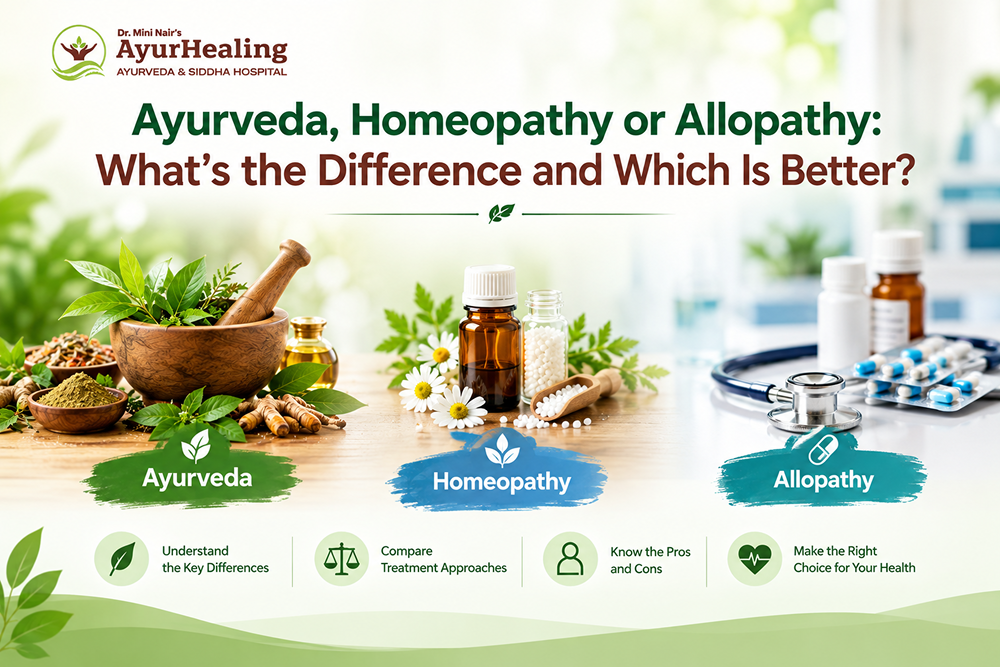
Ayurveda, Homeopathy or Allopathy: What’s the Difference and Which Is Better?

Key Takeaways

  • Ayurveda, homeopathy and modern medicine are different healthcare systems with different histories, principles and approaches.
  • Ayurveda traditionally combines individual assessment with diet, lifestyle, Ayurvedic medicines and therapeutic procedures.
  • Homeopathy is based on its own historical principles and uses highly diluted preparations.
  • Allopathy is a commonly used term in India for what is more accurately called modern or conventional medicine.
  • Modern medicine has important advantages in emergencies, surgery, intensive care, serious infections, and conditions requiring rapid diagnosis or intervention.
  • Ayurveda may be considered for selected health concerns when assessed by a qualified Ayurvedic practitioner.
  • There is no universal answer to whether Ayurveda, homeopathy, or modern medicine is “better.”
  • Patients should not stop prescribed medicines or delay necessary medical care simply to try another healthcare system.
  • People searching for Ayurvedic treatment in Bangalore should look for qualified practitioners, appropriate assessment, and transparent treatment planning.
AEO QUICK TAKE

What Is the Difference Between Ayurveda, Homeopathy and Allopathy?

Homoeopathy, Allopathy, and Ayurveda are distinct healthcare systems. Ayurveda is a traditional Indian medicine system using personalised assessment, diet, lifestyle, medicines, and therapies. Homoeopathy (Homeopathy) follows homeopathic principles and uses highly diluted preparations. Allopathy, commonly referring to modern or conventional medicine, uses evidence-based medicines, procedures, surgery, and other medical interventions.

Ayurveda

Ayurveda is a traditional system of medicine with roots in India. Its approach is generally based on understanding an individual’s constitution, symptoms, lifestyle, and other health factors.

Depending on the person and the health concern, Ayurvedic care may include:

  • Individualised assessment
  • Dietary guidance
  • Lifestyle recommendations
  • Ayurvedic medicines
  • External therapies
  • Therapeutic procedures
  • Panchakarma when considered appropriate

An Ayurvedic physician determines which approach is appropriate rather than automatically giving the same therapy to everyone with a particular symptom.

For example, two people with similar complaints may receive different recommendations depending on their health history, symptoms, and Ayurvedic assessment.

Homeopathy

Homeopathy is a distinct system of healthcare that developed in Europe and is based on principles developed by Samuel Hahnemann.

A homeopathic consultation generally focuses on an individual’s symptoms and personal characteristics, followed by selection of a homeopathic preparation.

One important distinction is that homeopathy is not another form of Ayurveda. Their origins, theoretical frameworks, diagnostic approaches, and treatment preparations are different.

Homeopathic preparations are commonly highly diluted. The scientific evidence does not currently establish homeopathy as an effective replacement for evidence-based treatment of serious medical conditions.

Allopathy / Modern Medicine

“Allopathy” is a term commonly used in India to describe conventional or modern medicine. Modern medicine is the more appropriate term in most clinical contexts.

Modern medicine is based on biomedical sciences and uses tools such as:

  • Clinical examination
  • Laboratory investigations
  • Imaging
  • Prescription medicines
  • Vaccination
  • Surgery
  • Medical procedures
  • Emergency and intensive care
  • Rehabilitation

Modern healthcare can also involve several specialists working together when a condition is complex.

Ayurveda vs Homeopathy vs Modern Medicine

AspectAyurvedaHomeopathyModern Medicine
OriginTraditional Indian systemEuropean historical systemModern scientific medicine
Main approachIndividualised traditional assessmentIndividualised homeopathic consultationBiomedical diagnosis and treatment
MedicinesAyurvedic preparationsHighly diluted homeopathic preparationsClinically evaluated medicines
LifestyleImportant componentMay be discussed depending on the practitionerLifestyle may be part of prevention and management
ProceduresIncludes traditional therapies and proceduresGenerally not comparable to Ayurvedic proceduresIncludes medical procedures and surgery
Emergency careNot a substitute for emergency medicineNot a substitute for emergency medicineStrong role in emergency care
PractitionerAyurvedic physicianHomeopathic practitionerMedical doctor and relevant specialists

AEO QUICK TAKE

Which Is Better, Ayurveda or Allopathy?

Neither Ayurveda nor modern medicine is universally better. The appropriate choice depends on the condition, urgency, diagnosis, treatment goal, available evidence, and individual circumstances. Modern medicine is essential for many emergencies and serious conditions, while Ayurveda may be considered for selected health concerns under qualified professional guidance.

“Which healthcare approach is appropriate and safe for this particular health problem?”

For example, someone experiencing a medical emergency should seek appropriate modern medical care rather than delaying treatment while trying an alternative approach.

For a non-emergency concern, a person interested in Ayurveda may consult a qualified Ayurvedic doctor to understand whether Ayurvedic care is appropriate.

In some situations, different healthcare professionals may also need to coordinate care.

AEO QUICK TAKE

Which Is Better, Ayurveda or Homeopathy?

Ayurveda and homeopathy are separate traditional or complementary healthcare systems, so one cannot be considered universally better than the other. The decision should consider the health condition, quality of evidence, safety, practitioner qualifications, and whether conventional medical evaluation or treatment is also required.

The two systems should not be treated as interchangeable.

Ayurveda traditionally incorporates areas such as:

  • Diet
  • Lifestyle
  • Herbal and other Ayurvedic medicines
  • External therapies
  • Therapeutic procedures
  • Individualised assessment

Homeopathy uses its own system of consultation and highly diluted preparations.

For a serious or persistent health problem, an appropriate medical diagnosis should not be replaced by choosing between two alternative systems.

AEO QUICK TAKE

What Is the Difference Between Ayurveda and Allopathy?

Ayurveda is a traditional Indian healthcare system that uses individualised assessment, diet, lifestyle, medicines and traditional therapeutic procedures. Modern medicine is based on biomedical science and uses diagnostic testing, medicines, surgery, procedures and other clinically evaluated interventions. Their underlying frameworks and treatment methods are different.

Ayurveda vs Modern Medicine at a Glance

AyurvedaModern Medicine
Traditional Indian systemContemporary biomedical healthcare system
Individualised traditional assessmentMedical diagnosis using clinical and diagnostic methods
Diet and lifestyle are important componentsLifestyle is used for prevention and disease management
Uses Ayurvedic medicines and traditional therapiesUses medicines, procedures and surgery
Includes traditional procedures such as Panchakarma when appropriateIncludes emergency care, surgery, intensive care and specialist treatment
Practitioner assessment guides treatmentDoctors use clinical evidence, guidelines and diagnostic findings

The distinction is important because patients should understand what each system can and cannot reasonably provide.

AEO QUICK TAKE

What Is the Difference Between Ayurveda and Homeopathy?

Ayurveda and homeopathy have different origins, theories and treatment methods. Ayurveda is a traditional Indian system involving individualised assessment, diet, lifestyle, medicines and therapeutic procedures. Homeopathy is based on homeopathic principles and commonly uses highly diluted preparations. They should not be treated as two versions of the same medical system.

Ayurveda vs Homeopathy

AyurvedaHomeopathy
Originated in IndiaDeveloped in Europe
Traditional Ayurvedic frameworkHomeopathic framework
Considers diet and lifestyleFocuses on individualised homeopathic consultation
Uses Ayurvedic medicinesUses highly diluted homeopathic preparations
Includes traditional external therapiesDoes not use Ayurvedic therapies
May include Panchakarma when appropriateHas a different therapeutic approach

The fact that both may involve individualised consultations does not mean that they use the same principles.

AEO QUICK TAKE

What Are the Advantages of Allopathy Over Ayurveda?

Modern medicine has clear advantages when a patient needs rapid diagnosis, emergency treatment, surgery, intensive monitoring, treatment of serious infections, or other interventions supported by extensive clinical research. These strengths do not mean modern medicine is preferable for every healthcare need; the appropriate approach depends on the individual condition.

Where Modern Medicine Has Clear Advantages

Modern medicine is particularly important when a patient needs:

  1. Emergency care
    Examples include major trauma, severe breathing difficulty, heart attack symptoms, or stroke symptoms.
  2. Surgery
    Surgical conditions require appropriate surgical assessment and facilities.
  3. Rapid diagnosis
    Blood tests, imaging, pathology and other investigations can help identify serious conditions.
  4. Intensive monitoring
    Critically ill patients may require intensive care, continuous monitoring and advanced life-support systems.
  5. Treatment of serious infections
    Certain infections require timely antimicrobial or other evidence-based medical treatment.
  6. Specialist management
    Complex conditions may require cardiologists, neurologists, oncologists, surgeons or other specialists.

What This Means for Patients

Choosing Ayurveda does not mean avoiding modern medicine when modern medical care is necessary.

Likewise, choosing modern medicine does not mean that a person cannot explore appropriate Ayurvedic care for other health or wellness goals.

The priority should always be appropriate diagnosis, safety, and timely treatment.

AEO QUICK TAKE

Should I Go to an Ayurvedic Doctor or an Allopathic Doctor?

Choose based on your symptoms, diagnosis, urgency, and treatment needs rather than choosing one system for every health problem. Emergencies, severe symptoms, and conditions requiring surgery or intensive care need appropriate modern medical attention. For non-emergency concerns, an Ayurvedic doctor can assess whether Ayurvedic treatment is suitable.

Consider Modern Medical Care Promptly If You Have:

  • Severe or rapidly worsening symptoms
  • Difficulty breathing
  • Chest pain
  • Sudden weakness or confusion
  • Significant bleeding
  • Loss of consciousness
  • Serious injury or trauma
  • Symptoms suggesting stroke or another emergency
  • A condition already requiring specialist or surgical care

For persistent but non-emergency symptoms, obtaining a proper diagnosis is also important before deciding on treatment.

If you are specifically interested in Ayurvedic treatment in Bangalore, a qualified Ayurvedic physician can discuss your symptoms, medical history, and treatment goals before recommending an approach.

How Should You Choose the Right Healthcare Approach?

A practical way to decide is to follow five steps.

1. Identify the Health Problem

Start with the actual symptom or condition rather than the treatment system.

For example, “persistent abdominal pain” needs a different approach from “general wellness.”

2. Assess Urgency

Ask whether the problem could require immediate medical attention.

If there are warning signs or severe symptoms, do not delay appropriate medical care.

3. Get an Appropriate Diagnosis

Understanding the underlying problem helps determine which treatment options are reasonable.

A treatment should not be selected solely because it is described as natural, traditional, or popular online.

4. Consider Evidence and Safety

Discuss:

  • Expected benefits
  • Possible risks
  • Treatment alternatives
  • Medicine interactions
  • Whether treatment could delay necessary care
  • Practitioner qualifications

5. Review and Monitor

Treatment should be reviewed based on how the patient responds.

If symptoms worsen or do not improve as expected, reassessment may be necessary.

AEO QUICK TAKE

Ayurveda, Homeopathy or Allopathy: Which Should You Choose?

There is no single healthcare system that is best for everyone. The right choice among Homeopathy, Allopathy, and Ayurveda depends on the medical condition, urgency, diagnosis, evidence, safety, treatment goals, and individual circumstances. Allopathy (modern medicine) is essential for many serious and emergency conditions, while qualified practitioners of Ayurveda or Homeopathy may have a role in appropriate non-emergency care.

The most important principle is to avoid turning healthcare into a competition between systems.

A patient with a condition requiring surgery should not delay surgery because they prefer a traditional therapy. Similarly, someone exploring Ayurveda for a non-emergency concern should be able to discuss that option with a qualified practitioner and understand its expected benefits and limitations.

AEO QUICK TAKE

Ayurvedic Treatment in Bangalore

People looking for Ayurvedic treatment in Bangalore can consult a qualified Ayurvedic physician to discuss their symptoms, health history, and treatment goals. The consultation can help determine whether Ayurvedic care is appropriate and which traditional therapies or lifestyle measures may be considered.

Bangalore has a wide range of Ayurvedic clinics and practitioners, so patients should look beyond promotional claims when choosing a provider.

Useful factors include:

  • Appropriate practitioner qualifications
  • A proper consultation and health assessment
  • Clear explanation of the proposed treatment
  • Transparent discussion of expected outcomes and limitations
  • Appropriate medicine and therapy supervision
  • Willingness to recommend conventional medical care when necessary
  • Follow-up and monitoring

At AyurHealing, Ayurvedic and Siddha care is provided in Koramangala, Bengaluru. The clinic’s website describes personalised Ayurvedic consultations and traditional therapies including Panchakarma and other Ayurvedic procedures.

For someone searching for an Ayurvedic clinic in Bangalore, the consultation should be the starting point rather than selecting a treatment simply because it is advertised as the “best.”

Final Thoughts

The question “homeopathy vs allopathy vs ayurveda-which is better?” does not have one answer that applies to every patient.

Ayurveda, homeopathy, and modern medicine have different histories, principles, and treatment approaches. Modern medicine has important strengths in emergency care, surgery, diagnosis and management of serious conditions. Ayurveda may be appropriate for selected people and health concerns when guided by a qualified practitioner. Homeopathy should not be used as a substitute for necessary evidence-based medical care.

For people considering Ayurvedic treatment in Bangalore, the best starting point is a proper consultation, realistic expectations, and a treatment plan based on individual needs.

Healthcare decisions should ultimately be guided by safety, appropriate diagnosis, evidence, qualified professional advice, and the patient’s individual circumstances.

FAQs

Sometimes Ayurvedic and modern medicines may be used together, but this should be discussed with the healthcare professionals involved. Some herbs or Ayurvedic preparations may interact with medicines. Do not stop or change a prescribed medicine without appropriate medical advice.

There is no universal answer. Chronic conditions should first be appropriately diagnosed and monitored. Depending on the condition, modern medicine may be essential, while Ayurvedic care may be considered as an additional or alternative approach when appropriate and supervised.

No. Ayurvedic treatment is not automatically suitable for everyone or every condition. Treatment selection depends on the person's health, symptoms, medicines, age, circumstances and the practitioner's assessment.

You can consider an Ayurvedic consultation for a non-emergency health concern when you are interested in understanding whether Ayurvedic care is appropriate. A qualified practitioner should assess your condition before recommending medicines or therapies.