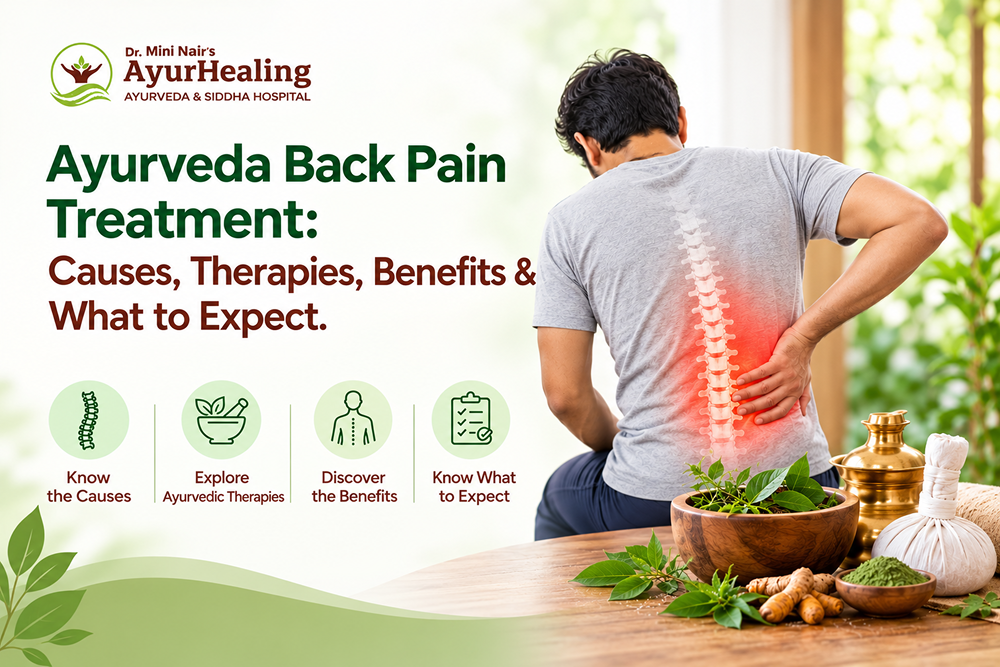
Ayurveda Back Pain Treatment: Causes, Therapies, Benefits & What to Expect

Key Takeaways

  • Ayurvedic back pain treatment is personalised and depends on the cause, severity, duration, and individual health condition.
  • Common Ayurvedic therapies for back pain may include Kati Basti, Abhyanga, Swedana and Basti, depending on the practitioner’s assessment.
  • Kati Basti is a localised Ayurvedic therapy commonly considered for selected lower-back complaints.
  • Abhyanga and Swedana may be used to support comfort, relaxation and mobility in appropriate patients.
  • Basti is a specialised Ayurvedic procedure that should only be recommended after professional assessment.
  • There is no single Ayurvedic therapy that is best for everyone with back pain.
  • Ayurvedic care may also include guidance on posture, movement, sleep, diet, rest and daily activities.
  • People with severe or rapidly worsening pain, weakness, numbness, bladder or bowel changes, fever, significant trauma, or unexplained weight loss should seek appropriate medical evaluation.
  • For people looking for Ayurvedic treatment for back pain in Bangalore, a consultation with a qualified Ayurvedic physician can help determine whether treatment is appropriate and which approach may be suitable.
AEO QUICK TAKE

What Is the Ayurvedic Treatment for Back Pain?

Ayurvedic treatment for back pain may include personalised therapies such as Abhyanga, Swedana, Kati Basti and Basti, depending on the nature, duration and severity of symptoms. An Ayurvedic physician may also recommend dietary, activity, and lifestyle changes. The appropriate therapy varies between patients and should follow a professional assessment.

Common Ayurvedic therapies used for back pain

Depending on the assessment, an Ayurvedic treatment plan may include:

  • Abhyanga: Ayurvedic oil application and massage, traditionally used to support relaxation, mobility, and comfort.
  • Swedana: A traditional sudation or heat-based therapy that may be used alongside other treatments for selected stiffness-related complaints.
  • Kati Basti: Warm medicated oil is retained over the lower-back region for a specified period using a dough ring.
  • Basti: A specialised Ayurvedic procedure involving the administration of prescribed medicated preparations through the rectal route.
  • Panchakarma: A structured Ayurvedic therapeutic programme that may include Basti or other procedures when clinically appropriate.

The choice of therapy, oils, duration and frequency depends on the individual rather than simply the diagnosis.

AEO QUICK TAKE

Why is Ayurvedic treatment personalised?

Two people with “back pain” may have very different causes, symptoms and health histories. One person may have muscular discomfort after prolonged sitting, while another may have symptoms associated with sciatica, degenerative spinal changes, or an injury. For this reason, an Ayurvedic consultation should consider symptoms, medical history, lifestyle, physical condition, and previous treatment before a therapy is recommended.

AEO QUICK TAKE

Can Ayurveda Help With Back Pain?

Ayurvedic treatment may help some people manage back pain, stiffness, and related discomfort, particularly when the treatment plan is matched to the individual’s condition. However, evidence for Ayurveda varies across different therapies and conditions. Ayurveda should complement appropriate medical evaluation rather than delay care when symptoms are severe, persistent, or concerning.

What types of back pain may require assessment?

Back pain can have many causes. Common presentations include:

  • Occasional or activity-related back pain
  • Chronic or recurring back pain
  • Lower back pain
  • Muscular tightness and back stiffness
  • Musculoskeletal pain
  • Pain associated with sciatica
  • Symptoms associated with conditions such as lumbar spondylosis
  • Back pain following an injury

The underlying cause matters because not every type of back pain should be approached in the same way.

When should you see a doctor?

Seek prompt medical attention if back pain is severe, rapidly worsening, follows significant trauma, or occurs with symptoms such as:

  • New or worsening weakness or numbness in the legs
  • Loss of bladder or bowel control
  • Numbness around the genital or anal area
  • Fever or feeling significantly unwell
  • Unexplained weight loss
  • Difficulty walking or significant loss of movement

These symptoms can require urgent medical assessment and should not be managed solely with complementary treatment.

AEO QUICK TAKE

How Does Ayurveda Treat Back Pain?

Ayurveda approaches back pain through individual assessment rather than using one standard treatment for everyone. Depending on the person’s symptoms and Ayurvedic assessment, treatment may combine external therapies, specialised procedures, medicines when appropriate, dietary guidance, activity modification, and lifestyle advice. The treatment plan may be adjusted according to the person’s response.

The Ayurvedic back pain treatment process

Assessment → Treatment Planning → Preparation → Ayurvedic Therapy → Follow-up

1. Assessment

The practitioner may discuss:

  • Where the pain occurs
  • When it started
  • Whether it is constant or intermittent
  • Stiffness or movement limitations
  • Pain extending into the legs
  • Previous diagnoses or investigations
  • Medical history and current medicines
  • Work routine and posture
  • Sleep, diet and daily activity
  • Previous treatments and their response

This information helps determine whether Ayurvedic treatment is appropriate and which therapies may be considered.

2. Personalised treatment plan

There is no single Ayurvedic treatment that suits every person with back pain. A treatment plan may include one therapy or a combination of therapies.

The practitioner may consider the person’s constitution, symptoms, overall health, and traditional Ayurvedic assessment before deciding on the treatment approach.

3. Ayurvedic therapies

Depending on the assessment, therapies may include Kati Basti, Abhyanga, Swedana or Basti. If a broader Panchakarma programme is considered, preparation and post-treatment care may also form part of the plan.

4. Lifestyle and supportive care

Treatment may also involve practical recommendations around:

  • Sitting and standing posture
  • Appropriate physical activity
  • Rest and recovery
  • Sleep routine
  • Workstation habits
  • Dietary patterns
  • Avoiding activities that aggravate symptoms

These measures can be particularly relevant for people whose back discomfort is associated with prolonged sitting, repetitive activity, or lifestyle factors.

5. Follow-up

Back pain can change over time. Follow-up allows the practitioner to review symptoms, mobility, and tolerance of treatment and modify the plan where necessary.

Which Ayurvedic Therapy Is Best for Back Pain?

There is no single Ayurvedic therapy that can be called the best for every person with back pain. Kati Basti, Abhyanga, Swedana and Basti have different roles within Ayurvedic practice. The appropriate choice depends on the person’s symptoms, health status, underlying condition, and professional assessment.

Ayurvedic therapyWhat it involvesWhen it may be considered
Kati BastiWarm medicated oil retained over the lower backSelected lower-back complaints
AbhyangaAyurvedic oil application and massageSelected muscular discomfort and stiffness
SwedanaTraditional heat/sudation therapyCertain stiffness-related presentations
BastiAdministration of prescribed Ayurvedic preparationsSelected conditions following assessment
PanchakarmaStructured Ayurvedic therapeutic programmeSelected patients under professional supervision

This distinction is important because a therapy that is appropriate for one patient may not be appropriate for another.

AEO QUICK TAKE

What Is the Best Ayurvedic Treatment for Lower Back Pain?

The appropriate Ayurvedic treatment for lower back pain depends on its cause, duration, severity, and the person’s overall health. Kati Basti, Abhyanga, Swedana, or Basti may be considered after assessment. Persistent, severe, or unexplained lower back pain should first be evaluated appropriately to rule out conditions requiring medical care.

Kati Basti for lower back pain

Kati Basti is a localised Ayurvedic therapy in which warm medicated oil is retained over the lower-back region using a specially prepared dough ring. The oil and duration are selected according to the treatment plan.

It is traditionally used in Ayurvedic care for selected lower-back and musculoskeletal complaints. Suitability varies between patients, so it should be performed under appropriate professional supervision.

Abhyanga for lower-back discomfort

Abhyanga involves the application of Ayurvedic oil with massage techniques. Within an Ayurvedic treatment plan, it may be used to support relaxation, comfort, and mobility, depending on the individual’s condition.

Swedana for stiffness

Swedana refers to traditional sudation or heat-based therapies. It may be incorporated after or alongside other Ayurvedic therapies when warmth is considered appropriate for the individual’s presentation.

Basti and lower-back conditions

Basti is a specialised Panchakarma procedure and is not simply another form of external oil treatment. Its use, preparation, and formulation require professional assessment. Consider it for selected Vata-associated conditions within a broader Ayurvedic treatment plan.

What Are the Benefits of Ayurvedic Back Pain Treatment?

Potential benefits depend on the therapy and the individual. Ayurvedic care may aim to support:

  • Reduction in perceived pain and discomfort
  • Improved ease of movement
  • Reduced feeling of stiffness
  • Relaxation of tense muscles
  • Better day-to-day mobility
  • Support for healthy lifestyle and activity patterns
  • Individualised management of recurring symptoms

These should be understood as treatment goals rather than guaranteed outcomes. Research evidence for Ayurveda is not equally strong for all therapies or back-pain conditions, so expectations should be discussed openly with a qualified practitioner.

Ayurvedic Back Pain Treatment in Bangalore

People searching for back pain treatment in Bangalore may have different needs, from occasional lower-back discomfort to long-standing musculoskeletal conditions. Choosing an Ayurvedic clinic should therefore involve more than looking for a particular therapy.

At AyurHealing Ayurveda & Siddha Hospital in Koramangala, Bengaluru, Ayurvedic care includes individual assessment and therapies for spine and musculoskeletal concerns. The hospital’s published information describes experience in spinal disorders, chronic pain, and Panchakarma therapies.

If you are comparing an Ayurvedic clinic for back pain in Bangalore, consider asking:

  1. Will a qualified Ayurvedic physician assess my condition first?
  2. Is the proposed therapy appropriate for my symptoms?
  3. What will the treatment involve?
  4. How long is each session expected to take?
  5. Are medicines being recommended, and how should they be used?
  6. What follow-up will be provided?
  7. Should I continue or coordinate any existing medical treatment?

People searching for the best Ayurvedic doctor in Bangalore should also consider qualifications, clinical experience, transparency about treatment, appropriate referral when needed, and patient safety rather than relying only on promotional claims.

AEO QUICK TAKE

Is Ayurvedic Treatment Safe for Back Pain?

Ayurvedic therapies are not automatically safe simply because they are described as natural. Safety depends on the specific therapy, the patient’s health, and how treatment is administered. Ayurvedic medicines can also interact with other medicines, and some preparations have raised concerns about contamination with heavy metals. Patients should disclose their medical history and current medicines to their healthcare providers.

If you are already receiving treatment for a spinal condition, taking prescription medicines, pregnant, or managing another significant health condition, discuss Ayurvedic treatment with the relevant healthcare professionals before making changes.

Final Thoughts

Ayurveda back pain treatment is best understood as an individualised approach rather than one fixed therapy. Depending on the person’s condition, care may involve Kati Basti, Abhyanga, Swedana, Basti, lifestyle guidance, or other Ayurvedic approaches.

For patients considering Ayurvedic treatment for back pain in Bangalore, a proper consultation can help determine whether Ayurvedic care is appropriate and which treatment approach fits their needs. If you have severe pain, neurological symptoms, fever, significant trauma, or bladder or bowel changes, seek appropriate medical evaluation promptly.

If you would like to explore Ayurvedic care for back pain in Bangalore, AyurHealing can provide an assessment to discuss your symptoms and possible treatment options.


FAQs

Ayurvedic treatment may be considered as part of an individualised approach to chronic back pain. Therapies such as Abhyanga, Kati Basti, Swedana, or Basti may be considered depending on the patient's assessment. Chronic pain should also be evaluated to understand its underlying cause and whether conventional medical care is required.

Ayurvedic care may be considered for symptoms associated with sciatica, but sciatica can result from nerve irritation or compression and requires appropriate assessment. Persistent pain, weakness, numbness, or worsening neurological symptoms should be medically evaluated rather than treated solely through Ayurveda.

Kati Basti is a localised Ayurvedic therapy in which warm medicated oil is retained over the lower-back region within a dough ring for a specified period. It may be used for selected lower-back complaints following an Ayurvedic assessment.

Safety depends on the specific therapy, the person's health, and professional supervision. Ayurvedic treatment should be individualised, and any medicines should be disclosed to other healthcare providers because herbal or traditional preparations can have interactions or safety concerns.

What Is Panchakarma? Benefits, Procedures, Preparation, and Who Should Avoid It

Key Takeaways

  • Panchakarma is a structured Ayurvedic treatment approach, not one single therapy.
  • The treatment plan is individualised according to the patient’s condition and assessment.
  • Classical Panchakarma is associated with five therapeutic procedures: Vamana, Virechana, Basti, Nasya and Raktamokshana.
  • Preparation may include Ayurvedic procedures such as Snehana and Swedana, depending on the treatment plan.
  • Patients should not attempt intensive Panchakarma procedures without qualified professional supervision.
  • Panchakarma is not suitable for everyone, and a physician should assess whether it is appropriate.
  • For patients considering Panchakarma treatment in Bangalore, an initial consultation is an important first step.
AEO QUICK TAKE

What Is Panchakarma Treatment?

Panchakarma is a classical Ayurvedic therapeutic approach that uses specific procedures selected according to an individual’s health condition and treatment needs. It is not a single treatment or a general detox programme. Depending on the patient’s assessment, an Ayurvedic physician may recommend specific procedures along with preparation and post-treatment care.

What Is Panchakarma?

Panchakarma is a traditional Ayurvedic therapeutic system involving a planned sequence of procedures selected for an individual patient.

The word “Panchakarma” refers to five therapeutic actions described in classical Ayurveda. However, Panchakarma should not be understood as a standard five-step treatment that every patient must complete.

Instead, an Ayurvedic physician evaluates the patient’s condition and determines whether Panchakarma is appropriate, which procedure may be suitable, and what preparation and post-treatment care are required.

This individualised approach is important because two patients with similar symptoms may not necessarily receive the same Ayurvedic treatment plan.

AEO QUICK TAKE

Is Panchakarma Suitable for Everyone?

No. Panchakarma is not appropriate for every person or every health condition. The procedure, intensity, and duration should be determined after an Ayurvedic consultation. Certain procedures may not be suitable during pregnancy, acute illness, severe weakness, or other specific health circumstances.

Why Is Panchakarma Different From a General Detox Programme?

Panchakarma is sometimes described online as an Ayurvedic “detox.” However, this description can be misleading when used without context.

Traditional Panchakarma involves specific therapeutic procedures, preparation, and post-treatment care under professional supervision. It should not be reduced to a restrictive diet, juice cleanse, or collection of home remedies.

For a patient considering Panchakarma therapy, the more useful question is not simply “How do I detox?” but:

“Is a particular Panchakarma procedure appropriate for my health condition?”

Why Is Panchakarma Considered an Individualised Treatment?

A Panchakarma treatment plan may depend on factors such as:

  • The patient’s current health condition
  • Age and general strength
  • Symptoms and clinical history
  • Ayurvedic assessment
  • Previous treatments
  • Current medicines or health conditions
  • The specific Panchakarma procedure being considered

This is why a consultation should generally take place before beginning Panchakarma treatment.

A qualified practitioner can explain the purpose of the recommended procedure, preparation requirements, expected duration, and precautions.

What Are the Five Panchakarma Procedures?

The five procedures traditionally associated with Panchakarma are Vamana, Virechana, Basti, Nasya, and Raktamokshana.

However, classifications can vary between Ayurvedic traditions and texts. Patients may therefore find slightly different explanations of the five procedures.

1. Vamana Panchakarma

Vamana refers to a physician-supervised therapeutic emesis procedure described in Ayurveda.

It is a specialised treatment and should not be confused with intentionally inducing vomiting at home.

Whether Vamana is appropriate depends on the individual’s condition and Ayurvedic assessment.

2. Virechana Panchakarma

Virechana refers to therapeutic purgation using prescribed Ayurvedic medicines under professional supervision.

The procedure, preparation, and medicines used depend on the patient’s treatment plan.

3. Basti Panchakarma

Basti involves the administration of prescribed Ayurvedic medicines through the rectal route.

Ayurvedic texts describe different forms of Basti, and the formulation and protocol can vary depending on the individual’s needs.

4. Nasya Panchakarma

Nasya involves administering selected Ayurvedic preparations through the nasal route.

It is used in specific situations based on Ayurvedic assessment and should be performed according to an appropriate protocol.

5. Raktamokshana Panchakarma

Raktamokshana refers to traditional bloodletting procedures described in Ayurvedic literature.

It is a specialised procedure and should only be considered where clinically appropriate and under suitable professional supervision.

What Is the Panchakarma Treatment Process?

Panchakarma treatment is generally approached as a process rather than a single appointment.

Stage 1: Ayurvedic Consultation

The first stage is assessment.

The Ayurvedic physician discusses the patient’s symptoms, medical history, lifestyle, and other relevant factors before determining whether Panchakarma is appropriate.

Stage 2: Preparation

The preparation stage is commonly known as Purvakarma.

Depending on the treatment plan, it may include procedures such as:

  • Snehana
  • Swedana
  • Dietary modifications
  • Rest and lifestyle instructions
  • Other physician-prescribed preparation

The exact preparation is not identical for every patient.

Stage 3: Main Procedure

The physician selects the appropriate Panchakarma procedure based on the assessment.

A patient may receive one particular procedure rather than all five.

Stage 4: Post-Treatment Care

After the main procedure, the patient may receive dietary and lifestyle instructions.

Gradually returning to a normal diet and routine may be part of the post-treatment plan.

This stage should not be ignored because appropriate aftercare is part of a structured Panchakarma programme.

What Are the Benefits of Panchakarma?

The benefits of Panchakarma depend on the procedure performed, the patient’s condition, and the overall treatment plan.

Within traditional Ayurveda, Panchakarma is used as part of therapeutic and preventive approaches.

Patients may seek Ayurvedic Panchakarma treatment as part of care for particular health concerns or for a physician-guided wellness programme.

However, it is important to distinguish traditional Ayurvedic indications from modern scientific evidence.

Panchakarma should not be presented as a guaranteed cure for disease or as a replacement for necessary medical treatment.

The appropriate goal is a personalised treatment plan based on professional assessment.

Panchakarma Treatment Workflow

1. CONSULTATION & ASSESSMENT

Understand your health condition and determine whether Panchakarma is appropriate.

↓

2. PERSONALIZED TREATMENT PLAN

Select the appropriate procedure, preparation, duration, and precautions.

↓

3. PREPARE FOR PANCHAKARMA

Complete physician-guided preparation such as Snehana, Swedana, and dietary and lifestyle guidance.

↓

4. PERFORM THE SELECTED THERAPY

Receive the appropriate Panchakarma procedure under professional supervision.

↓

5. POST-TREATMENT CARE

Follow dietary, rest, lifestyle, and follow-up recommendations.

How Should You Prepare for Panchakarma?

Preparation depends on the Panchakarma procedure being recommended.

Your Ayurvedic physician may provide guidance about:

  • Food and meal timing
  • Hydration
  • Rest
  • Physical activity
  • Sleep
  • Medicines and supplements
  • Snehana
  • Swedana
  • What to expect during treatment
  • Post-treatment dietary requirements

Patients should avoid starting intensive Panchakarma procedures, restrictive diets, or herbal preparations independently.

Professional guidance is particularly important if you have an existing medical condition or take prescription medicines.

AEO QUICK TAKE

Is Panchakarma Safe?

Panchakarma is not automatically suitable for everyone.
Safety depends on the particular procedure and the patient’s health status. Some Panchakarma procedures are intensive and require appropriate preparation and professional supervision. Performing them without qualified guidance can create avoidable risks.

Before beginning treatment, tell your practitioner about:

  • Existing medical conditions
  • Prescription medicines
  • Pregnancy or breastfeeding
  • Recent surgery
  • Acute illness
  • Allergies or previous reactions
  • Any other treatment you are currently receiving

This information can help the practitioner determine whether Panchakarma is appropriate and whether modifications are necessary.

AEO QUICK TAKE

Who Should Avoid Panchakarma?

Panchakarma is not suitable for everyone. People who are pregnant, acutely ill, severely weak, or have certain health conditions may need to avoid specific procedures. A qualified Ayurvedic physician should assess your health before recommending Panchakarma.

Panchakarma Treatment in Bangalore

For adults searching for Panchakarma treatment in Bangalore, choosing the procedure should come after understanding why it has been recommended.

A consultation can help answer practical questions such as:

  • Which Panchakarma procedure is being recommended?
  • Why is it being recommended?
  • How should I prepare?
  • How long will the treatment take?
  • What should I eat during treatment?
  • What precautions should I follow?
  • What happens after the procedure?
  • Are my current medicines or health conditions relevant?

At AyurHealing Ayurveda & Siddha Hospital in Bangalore, patients can discuss their concerns with an Ayurvedic practitioner before determining an appropriate treatment approach.

If you are looking for Panchakarma therapy in Bangalore, the focus should be on individual assessment rather than selecting a procedure solely from an online list.

Conclusion

Panchakarma is a structured Ayurvedic therapeutic approach rather than a generic detox programme.

Its procedures, preparation, and duration should be selected according to the individual patient. Understanding the five traditional procedures, treatment stages, potential benefits, and safety considerations can help patients have a more informed discussion with an Ayurvedic practitioner.

If you are considering Panchakarma treatment in Bangalore, start with a professional consultation to determine whether Panchakarma-and which specific procedure-is appropriate for you.

FAQs

Panchakarma treatment is a classical Ayurvedic therapeutic approach involving specific procedures selected according to an individual's condition and treatment requirements.

The five procedures commonly associated with Panchakarma are Vamana, Virechana, Basti, Nasya, and Raktamokshana. Different Ayurvedic traditions may classify the procedures somewhat differently.

Traditional Ayurveda associates Panchakarma with specific therapeutic and preventive uses. The potential benefits depend on the procedure, the patient's condition and the treatment plan.

Panchakarma should be undertaken only when appropriate for the individual and under qualified professional supervision. It is not automatically suitable for everyone.

No. Suitability depends on factors including the patient's health condition, age, strength, medicines, and the particular procedure being considered.

There is no universal treatment duration. The length depends on the patient's condition, the selected procedure, preparation, and post-treatment care.

Intensive Panchakarma procedures should not be self-administered. A qualified practitioner should determine whether a procedure is appropriate and provide the necessary supervision.

Ayurvedic Therapy in Bangalore: Explore Traditional Healing Approaches

Ayurvedic therapy in Bangalore is increasingly being explored by people looking for personalised approaches to health, traditional treatment methods, and long-term wellness. Ayurveda is an established Indian traditional healthcare system that uses a combination of dietary guidance, lifestyle practices, medicines, and therapeutic procedures. Today, people may consider Ayurvedic care for a wide range of health concerns, either as part of traditional treatment or alongside conventional healthcare when appropriate.

At Ayurhealing, understanding what different Ayurvedic therapies involve can help people make informed decisions about their care. From Panchakarma treatment and Abhyanga to Shirodhara, Nasya and specialised local therapies, each procedure has a particular place in Ayurvedic practice and should be selected according to an individual’s needs.

What Is Ayurvedic Therapy?

Ayurvedic therapy refers to therapeutic approaches used within Ayurveda to support health and manage health conditions according to traditional Ayurvedic principles. Ayurveda takes an individualised approach, considering factors such as constitution, lifestyle, diet, digestion, sleep and other aspects of health.

The World Health Organization recognises Ayurveda as a traditional medicine system and has published benchmarks addressing the quality, safety, training and practice of Ayurveda. These benchmarks are intended to support appropriate and safe practice rather than to establish that every Ayurvedic intervention is effective for every medical condition.

In traditional Ayurveda, treatment may involve medicines, diet and lifestyle advice, as well as specific therapeutic procedures. The Ministry of Ayush also maintains an official research portal containing research relating to Ayurveda and other AYUSH systems.

An Ayurvedic therapy should therefore be viewed as part of an overall treatment plan, rather than as a standalone procedure that is suitable for everyone.

How Is Ayurvedic Treatment Different from a General Wellness Treatment?

One important distinction is the purpose of the therapy.

A general wellness service may focus primarily on relaxation or comfort. Ayurvedic treatment is intended to be selected according to an individual’s health assessment and traditional Ayurvedic principles.

Depending on the person and the reason for consultation, an Ayurvedic doctor may consider symptoms, medical history, diet, daily routine, sleep, digestion, and other relevant factors before recommending a treatment.

This is particularly important for people with persistent or diagnosed health conditions. An appropriate practitioner should also recognise when conventional medical assessment or referral is needed.

Common Ayurvedic Therapies

Ayurveda includes a broad range of procedures. The following are among the therapies people commonly search for when looking for Ayurvedic care in Bangalore.

Panchakarma Treatment

Panchakarma treatment is a specialised group of therapeutic procedures described in classical Ayurvedic texts. The Ministry of Ayush’s Ayusoft resource describes Panchakarma as five therapeutic procedures: Vamana, Virechana, Basti, Nasya and Raktamokshana.

Panchakarma is not simply a generic “detox” programme. The procedures are distinct, and their use, preparation and aftercare differ. Some procedures can be physically demanding and should not be undertaken without appropriate assessment and supervision.

People searching for Panchakarma treatment in Bangalore should therefore look for qualified Ayurvedic care rather than selecting a procedure solely because it is advertised as a cleansing programme.

Abhyanga Massage in Bangalore

Abhyanga is a traditional Ayurvedic oil application and massage procedure. It is commonly incorporated into Ayurvedic care according to an individual’s needs.

The oils, technique, duration, and frequency may vary depending on the traditional approach being followed and the individual’s assessment.

Although people may search for Abhyanga massage in Bangalore as a relaxation service, its use within an Ayurvedic treatment setting is different from choosing a general massage service.

Shirodhara Treatment in Bangalore

Shirodhara is a traditional Ayurvedic procedure in which a continuous stream of liquid is applied to the forehead in a controlled manner.

It is often discussed in relation to relaxation and traditional Ayurvedic approaches to wellbeing. However, claims that Shirodhara can cure specific medical conditions should be treated cautiously because the clinical evidence for many such claims remains limited.

If you are considering Shirodhara treatment in Bangalore, an Ayurvedic practitioner should first determine whether the procedure is appropriate for you.

Nasya Treatment in Bangalore

Nasya is a traditional Ayurvedic procedure involving the administration of selected substances through the nasal route. Classical Ayurvedic sources describe Nasya among the procedures used for conditions involving the region above the clavicle, while the Ministry of Ayush’s Panchakarma resource identifies it as one of the five Panchakarma procedures.

Because Nasya involves administration through the nasal route, it should not be treated as a do-it-yourself home remedy. The substance, preparation, and method should be determined by a suitably qualified practitioner.

Basti Therapy

Basti involves the administration of an Ayurvedic preparation through the rectal route and is one of the procedures included in classical Panchakarma descriptions.

The Ministry of Ayush describes Basti as a medicated enema used within Ayurvedic practice.

Because it is an invasive procedure, Basti therapy requires appropriate professional assessment and supervision. It is not appropriate for every person or every health condition.

Other Traditional Ayurvedic Therapies

Alongside the better-known procedures, Ayurvedic practice includes several therapies that are directed towards particular parts of the body.

Kizhi Therapy

Kizhi refers to a traditional Ayurvedic procedure involving herbal powders or other selected materials placed in a bolus or pouch and applied according to the treatment plan. Different forms may be used in Ayurvedic practice.

People often search for Kizhi therapy in relation to musculoskeletal care, but the suitability of a particular form should be determined during an individual consultation.

Pizhichil Therapy

Pizhichil is a traditional Ayurvedic procedure involving the controlled application of warm oil or another prescribed liquid over the body. It is a specialised procedure rather than a general massage service.

Its use should be based on an Ayurvedic assessment and appropriate clinical supervision.

Udvartana Therapy

Udvartana is a traditional Ayurvedic procedure involving the application and rubbing of herbal powders or pastes over the body.

It is distinct from conventional exfoliation or cosmetic body treatments. In Ayurvedic practice, the procedure, materials, and technique are selected according to the individual’s needs.

Kati Basti Treatment

Kati Basti treatment is a local Ayurvedic procedure in which a reservoir is created over the lower-back region and filled with appropriately selected warm oil or another prescribed substance.

It is traditionally used as a local therapeutic procedure. However, persistent or severe back pain requires appropriate medical assessment because back pain can have many causes.

Janu Basti Treatment

Janu Basti is a local Ayurvedic procedure applied around the knee region. It involves creating a contained area over the knee and applying warm oil or another prescribed substance.

Someone considering Janu Basti treatment for knee pain should receive an appropriate assessment rather than assuming that every type of knee pain has the same cause.

Greeva Basti Treatment

Greeva Basti is a local Ayurvedic procedure traditionally applied around the neck region.

People with neck pain, stiffness, numbness, weakness, or symptoms extending into the arms should seek appropriate medical evaluation before relying on any traditional therapy.

What Can You Expect from Ayurvedic Treatment in Bangalore?

An Ayurvedic consultation generally begins with understanding why you are seeking care. Depending on the practitioner and the clinical situation, the consultation may include questions about symptoms, food habits, sleep, digestion, lifestyle, previous treatments, and other health information.

The practitioner may then recommend a personalised plan that could include diet and lifestyle changes, Ayurvedic medicines or selected therapies.

The appropriate therapy depends on the individual; there is no single Ayurvedic treatment that is suitable for everyone.

This personalised approach is consistent with the broader way Ayurveda is described within traditional medicine. At the same time, it is important to distinguish traditional concepts from established biomedical evidence. WHO notes that an important challenge for traditional medicine is strengthening the scientific evidence concerning the safety and effectiveness of products and practices.

Is Ayurvedic Therapy Supported by Scientific Evidence?

Evidence varies considerably between different Ayurvedic medicines and procedures.

The National Center for Complementary and Integrative Health (NCCIH) notes that relatively few well-designed clinical trials have evaluated Ayurveda as a whole, and that evidence for many health conditions remains limited. Some individual studies have reported potential benefits for particular conditions, but this does not establish that Ayurveda is effective for every condition or that one therapy works for everyone.

This distinction matters when choosing treatment. Traditional use and modern clinical evidence are not the same thing.

For this reason, Ayurvedic websites and clinics should avoid promising guaranteed cures or presenting traditional therapies as replacements for necessary medical care.

Safety Matters When Choosing Ayurvedic Therapy

“Natural” does not automatically mean risk-free. Safety depends on the particular treatment, the person’s health, the way a procedure is performed, and the quality and preparation of any medicine used.

NCCIH specifically warns that some Ayurvedic preparations may contain potentially toxic amounts of heavy metals such as lead, mercury or arsenic. It also advises people to tell their healthcare providers about complementary approaches they are using.

If you take prescription medicines, are pregnant or breastfeeding, have a chronic illness, or are preparing for surgery, discuss Ayurvedic medicines or procedures with the relevant healthcare professional before starting treatment.

For procedures such as Basti or Nasya, professional supervision is particularly important.

Choosing an Ayurvedic Clinic in Bangalore

With many options available, choosing an Ayurvedic clinic in Bangalore should involve more than comparing advertisements or online claims.

If you are searching for the Best Ayurvedic clinic in Bangalore, consider whether the clinic provides:

  • Consultation with a suitably qualified Ayurvedic physician
  • A clear explanation of the proposed treatment
  • Appropriate assessment before procedures
  • Transparent information about medicines and therapies
  • Willingness to recommend conventional medical evaluation when necessary
  • Proper hygiene and appropriate treatment facilities

The WHO benchmarks for Ayurveda include considerations relating to practitioner training, facilities, health interventions, quality assurance, safety and ethical practice.

Similarly, someone searching for the Best Ayurvedic doctor in Bangalore should focus on verifiable qualifications, relevant experience and responsible clinical practice rather than relying only on marketing descriptions such as “best” or “number one”.

When Should You Seek Conventional Medical Care?

Ayurvedic care should not delay urgent medical attention.

Seek prompt medical evaluation for symptoms that are severe, sudden, rapidly worsening, or associated with concerning signs such as difficulty breathing, chest pain, fainting, seizures, significant weakness, confusion, severe bleeding, or other emergency symptoms.

For persistent symptoms or a condition that has not been diagnosed, an appropriate healthcare professional can help determine the underlying cause before you decide whether Ayurvedic treatment is suitable.

Ayurvedic therapy can be considered within a broader healthcare plan when appropriate, but it should not replace emergency care or necessary conventional treatment.

Why Consider Personalised Ayurvedic Care?

The appeal of Ayurveda for many people lies in its emphasis on individual assessment, diet, lifestyle, and traditional therapeutic procedures.

Rather than assuming that everyone with the same symptom needs the same treatment, an Ayurvedic consultation may consider the person’s broader health and daily routine.

For someone researching Ayurvedic treatment in Bangalore, this can be a useful starting point for understanding the available options and discussing whether a particular therapy is appropriate.

The key is to approach Ayurvedic care with realistic expectations, qualified professional guidance, and an understanding of what is known-and what remains uncertain-about the evidence.

Ayurvedic Therapy in Bangalore: Making an Informed Choice

Ayurvedic therapy in Bangalore encompasses a wide range of traditional procedures, from Panchakarma and Abhyanga to Shirodhara, Nasya, Basti, Kizhi, and local therapies such as Kati Basti and Janu Basti.

Each procedure has a different method and traditional purpose. None should be selected simply because it is popular online or because a website promises a particular result.

At Ayurhealing, readers can use this information as a starting point for understanding Ayurvedic treatment and discussing their individual needs with a qualified Ayurvedic physician.

If you are considering treatment for an ongoing health concern, a professional assessment is an important first step. Good Ayurvedic care should be personalised, transparent and responsible-and should work alongside appropriate medical care when required.

FAQs

Ayurvedic therapy refers to therapeutic procedures used within the traditional Ayurveda system. Depending on the individual's needs, these may include Panchakarma procedures, Abhyanga, Shirodhara, Nasya, Basti and other specialised treatments.

Depending on the clinic, Ayurvedic therapies in Bangalore may include Panchakarma treatment, Abhyanga, Shirodhara, Nasya, Basti, Kizhi, Pizhichil, Udvartana, Kati Basti, Janu Basti and Greeva Basti.

No. Panchakarma includes several different procedures, and suitability depends on the individual's health, symptoms, and circumstances. It should be recommended and supervised by a qualified Ayurvedic practitioner rather than undertaken as a generic detox programme.

Look for a suitably qualified Ayurvedic physician, transparent consultation and treatment practices, appropriate assessment, and a willingness to coordinate with conventional healthcare when necessary. Do not rely solely on claims that a practitioner is the "best".

Ayurvedic therapy should not be used to delay emergency care or necessary conventional medical treatment. For persistent, severe, or unexplained symptoms, seek assessment from an appropriately qualified healthcare professional.

Ayurveda for Weight Loss: Natural Approaches to Healthy Fat Loss

Ayurveda weight loss approaches healthy weight management by looking beyond calories and exercise alone. It considers food habits, digestion, daily routines, sleep, activity, stress, and an individual’s overall constitution. For people exploring Ayurveda fat loss, the goal is not simply to lose weight quickly, but to develop sustainable habits that support a healthier lifestyle.

Modern weight management can be challenging because factors such as irregular meals, sedentary routines, poor sleep, stress, and highly processed foods can all influence weight. Ayurveda offers a traditional framework for addressing these lifestyle patterns through personalised diet and daily-routine guidance.

At Ayurhealing, Ayurvedic care can be tailored to an individual’s needs, helping them understand how traditional Ayurvedic principles may complement a healthy approach to weight management.

Why Is Losing Weight Sometimes Difficult?

Weight gain is rarely caused by just one factor. Eating patterns, physical activity, sleep, stress, medications, genetics, age, and certain medical conditions can all influence body weight.

Many people try restrictive diets and short-term programmes, only to return to previous eating habits once the programme ends. This cycle can make sustainable weight management difficult.

A more practical approach is to gradually improve everyday habits.

Healthy weight loss is generally about creating sustainable lifestyle changes rather than searching for a quick solution.

This is where people interested in Ayurveda to reduce weight may find value in a personalised approach.

What Does Ayurveda Say About Weight Management?

Traditional Ayurveda describes body composition and metabolism through concepts such as Agni (digestive and metabolic capacity), Ahara (food), Vihara (lifestyle), and the balance of the Doshas.

Ayurvedic practitioners may consider factors such as appetite, digestion, food preferences, activity levels, sleep patterns, stress, and individual constitution when developing a plan.

This means an Ayurvedic treatment for weight loss does not necessarily look the same for every person.

One individual may need to focus primarily on meal timing and portion awareness, while another may benefit from improving physical activity, sleep consistency, or dietary quality.

Personalisation is one of the key principles of traditional Ayurvedic care.

Ayurveda Fat Loss: A Sustainable Perspective

The phrase Ayurveda fat loss is often associated with rapid weight reduction. However, a responsible Ayurvedic approach should focus on overall health and sustainable weight management rather than promising dramatic results in a short period.

Healthy fat loss typically involves creating appropriate changes in food intake and physical activity while considering an individual’s health status.

Ayurveda may complement these efforts by encouraging structured daily routines, mindful eating, appropriate food choices, and attention to digestion and lifestyle.

It is important to remember that Ayurveda should not replace evidence-based medical evaluation when weight gain is associated with an underlying medical condition.

Ayurvedic Diet Plan for Weight Loss

Food is an important part of traditional Ayurvedic lifestyle guidance. An Ayurvedic diet plan for weight loss should ideally be personalised instead of copied from a generic online diet chart.

A practitioner may consider your usual eating schedule, appetite, digestion, activity level, food preferences, and health needs before making recommendations.

Rather than focusing only on eliminating particular foods, the emphasis can be placed on improving the overall quality and consistency of meals.

Choosing Better Foods

When planning meals, nutrient-dense foods can form the foundation of a healthy eating pattern. Depending on individual dietary requirements, this may include vegetables, fruits, whole grains, legumes, pulses, nuts, seeds, and appropriate sources of protein.

People often search for the best foods for weight loss, but there is no single food that causes weight loss by itself.

A better question is: Which foods can help me maintain balanced, satisfying meals while supporting my overall health?

For many people, reducing frequent consumption of highly processed foods, sugary drinks, and excessive portions can be more practical than following an unnecessarily restrictive diet.

Ayurvedic Medicine for Weight Loss: What You Should Know

Searches for ayurvedic medicine for weight loss are common, particularly among people looking for a natural alternative to conventional weight-loss products.

However, “natural” does not automatically mean safe or appropriate for everyone. Herbal preparations can have active ingredients and may interact with medicines or be unsuitable for people with certain health conditions.

Ayurvedic medicines should be selected and used under the guidance of a qualified Ayurvedic practitioner.

A professional assessment is particularly important if you are pregnant, taking prescription medicines, have a chronic health condition, or are considering multiple supplements at the same time.

Avoid products that promise extremely rapid weight loss or guaranteed fat burning.

Ayurveda Therapy for Weight Loss

Depending on the individual’s assessment, traditional Ayurvedic care may incorporate selected therapies alongside dietary and lifestyle recommendations.

The purpose should be to support an individual’s broader health and weight-management plan rather than treating a therapy as a standalone solution for fat loss.

An Ayurveda therapy for weight loss plan should therefore be personalised and professionally supervised.

The specific approach can vary according to the individual’s constitution, health status, lifestyle, and treatment goals.

Lifestyle Habits That Support Healthy Weight Management

Ayurveda places considerable importance on daily routine. This can be particularly relevant for people whose eating and sleeping patterns have become irregular.

Instead of making many changes at once, start with a few realistic habits.

Make Meals More Consistent

Try to maintain reasonably consistent meal timings and avoid routinely skipping meals and then overeating later.

Eating slowly and paying attention to hunger and fullness can also support mindful eating.

Prioritise Movement

Regular physical activity is an important component of healthy weight management. Walking, strength exercises, yoga, or other forms of activity can be selected according to fitness level and medical suitability.

Improve Sleep

Poor sleep can make healthy eating and weight management more difficult. Establishing a regular sleep schedule and reducing unnecessary screen exposure before bedtime may support better sleep habits.

Manage Everyday Stress

Stress can influence eating behaviour, sleep, and daily routines. Breathing exercises, meditation, appropriate physical activity, and other relaxation practices may help support overall wellbeing.

Small, consistent improvements are often more sustainable than extreme short-term changes.

Ayurvedic Fat Loss Treatment: Who May Benefit?

People considering Ayurvedic fat loss treatment may include those who want professional guidance on diet, lifestyle, traditional Ayurvedic principles, and healthy weight management.

However, weight gain can sometimes be associated with conditions such as thyroid disorders, polycystic ovary syndrome, certain medications, sleep disorders, or other health issues.

For this reason, unexplained or significant weight gain should not simply be attributed to lifestyle or treated with self-prescribed herbal products.

A qualified practitioner can help determine whether an Ayurvedic approach is appropriate and whether further medical evaluation may be necessary.

Ayurvedic Weight Loss Treatment in Bangalore

For people searching for Ayurvedic weight loss treatment locally, choosing the right practitioner is important.

If you are looking for the Best Ayurvedic Doctor in Bangalore, consider professional qualifications, relevant experience, personalised consultation, transparency about treatment recommendations, and responsible communication about expected outcomes.

An Ayurvedic clinic in Bangalore should ideally provide clear information about the proposed treatment approach rather than making unrealistic promises about rapid weight loss.

At Ayurhealing, the emphasis can be placed on understanding the individual’s needs and creating a personalised approach that combines Ayurvedic principles with practical lifestyle guidance.

Ayurveda to Reduce Weight: What Results Can You Expect?

There is no universal timeline for healthy weight loss. Results can differ according to starting weight, diet, activity, sleep, age, health conditions, medications, and consistency with lifestyle changes.

It is therefore better to focus on measurable improvements in habits and overall health rather than expecting a specific number of kilograms to disappear within a fixed period.

A sustainable weight-management plan should be realistic, personalised, and focused on long-term health.

Begin Your Weight-Management Journey with Ayurhealing

Healthy weight management is not simply about reducing the number on a weighing scale. It involves building eating habits, activity patterns, sleep routines, and lifestyle practices that can be maintained over time.

Ayurveda weight loss focuses on understanding the individual rather than prescribing exactly the same approach to everyone.

If you are considering Ayurvedic treatment for weight loss, professional guidance can help you choose an approach that is appropriate for your individual needs. Ayurhealing provides Ayurvedic care with an emphasis on personalised assessment, traditional principles, and practical lifestyle guidance.

For individuals searching for the Best Ayurvedic doctor in Bangalore or an Ayurvedic clinic in Bangalore, a personalised consultation can be a useful first step toward understanding your options for healthy weight management.

FAQs

Ayurveda may support healthy weight management through personalised dietary, lifestyle, and traditional treatment approaches. However, individual results vary, and it should not be presented as a guaranteed method for rapid weight loss.

An Ayurvedic treatment for weight loss may include personalised dietary advice, lifestyle recommendations, physical activity guidance, herbal preparations, and selected traditional therapies, depending on an individual's assessment.

Some Ayurvedic medicines and herbal preparations are traditionally used in Ayurvedic practice, but they are not suitable for everyone. Use them only with guidance from a qualified practitioner, particularly if you take other medicines or have an existing health condition.

There is no single “best” food for weight loss. A balanced diet containing vegetables, fruits, whole grains, legumes, pulses, healthy sources of protein, and appropriate portions can support a healthy eating pattern.

People looking for Ayurvedic weight loss treatment in Bangalore should choose a qualified Ayurvedic practitioner or established Ayurvedic clinic that provides personalised assessment and avoids unrealistic weight-loss claims.