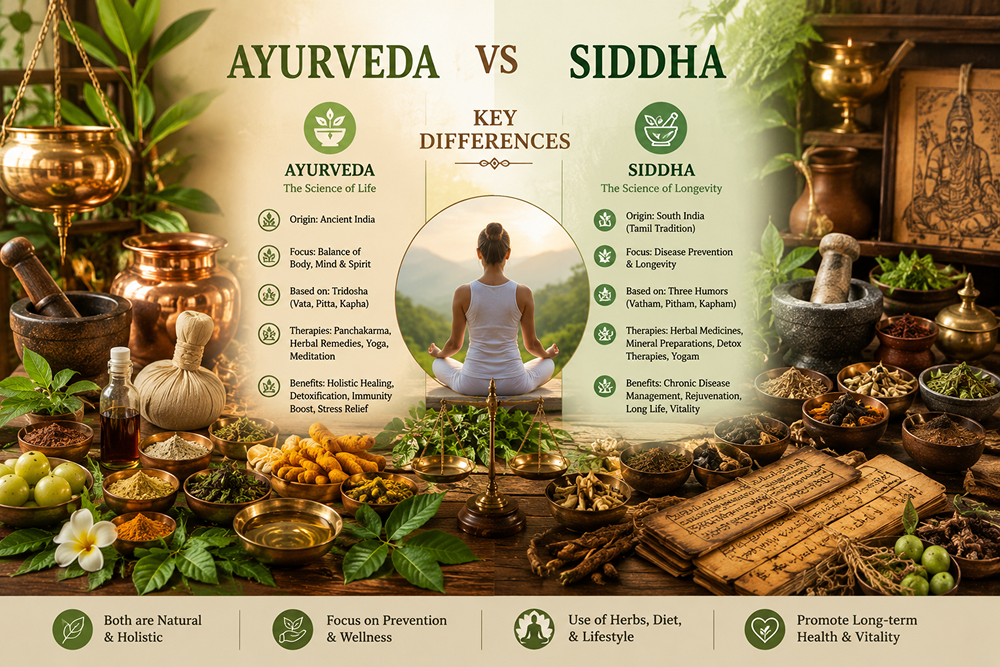
Choosing the right traditional healthcare system can be challenging, especially when both Ayurveda and Siddha have long histories of promoting natural healing and overall well-being. If you are searching for the Difference Between Siddha and Ayurveda in Bangalore: Benefits, Treatments & Key Differences, understanding how these systems differ can help you make an informed decision. Whether you are looking for an Ayurveda & Siddha hospital, exploring Ayurveda and Siddha Treatments, or searching for Ayurveda treatment near me, this guide explains their origins, treatment methods, and benefits simply and practically.
Understanding Ayurveda and Siddha
Although Ayurveda and Siddha are both ancient Indian systems of medicine, they developed in different regions and follow unique philosophies. Both emphasize restoring balance within the body through natural methods, lifestyle modifications, and personalised care rather than simply addressing symptoms.
Today, many people in Bangalore seek these traditional approaches to complement their wellness journey and improve their quality of life.
What is Ayurveda?
Ayurveda is one of the world’s oldest holistic healthcare systems, originating in India more than 5,000 years ago. The word Ayurveda combines two Sanskrit words: Ayur (life) and Veda (knowledge), meaning “the science of life.”
The foundation of Ayurveda is based on maintaining harmony between the three doshas:
- Vata – controls movement and the nervous system
- Pitta – regulates digestion and metabolism
- Kapha – provides stability, strength, and lubrication
According to Ayurveda, illness develops when these doshas become imbalanced. Treatment focuses on restoring equilibrium through personalised herbal formulations, dietary guidance, lifestyle modifications, cleansing therapies, and therapeutic procedures such as Panchakarma therapy.
Rather than offering a one-size-fits-all approach, Ayurveda recognises that every individual has a unique body constitution, known as Prakriti, and tailors treatments accordingly.
What is Siddha Medicine?
Siddha is one of South India’s oldest traditional medical systems, with its roots deeply connected to Tamil culture and philosophy. It is believed to have been developed by enlightened sages known as Siddhars, who documented extensive knowledge about natural healing, herbs, minerals, yoga, and healthy living.
Like Ayurveda, Siddha focuses on maintaining balance within the body but follows the principles of:
- Vatham
- Pitham
- Kabam
These are considered the three fundamental life forces that regulate bodily functions.
Siddha medicine is widely recognised for its traditional use in supporting individuals with chronic health concerns, musculoskeletal conditions, neurological disorders, and skin-related issues. Along with herbal preparations, Siddha also incorporates specialised practices such as Varmam therapy, breathing techniques, dietary recommendations, and lifestyle management to support overall well-being.
Its emphasis on prevention, longevity, and maintaining physical and mental balance has contributed to its continued popularity across South India.
The Origin and Philosophy of Ayurveda and Siddha
Although Ayurveda and Siddha share the goal of promoting holistic health, their historical origins and philosophical foundations differ significantly.
Ayurveda originated in the northern regions of India and evolved through ancient Sanskrit texts such as the Charaka Samhita and Sushruta Samhita. It emphasises achieving harmony between the body, mind, and spirit by balancing the three doshas. Prevention, healthy routines, seasonal living, and natural nutrition are central to Ayurvedic practice.
Siddha, on the other hand, originated in Tamil Nadu and is closely associated with the teachings of the Siddhars. Ancient Tamil literature describes Siddha as a system that not only promotes health but also seeks longevity and spiritual development. It combines herbal medicine, mineral preparations, yoga, meditation, and Varmam therapy to support the body’s natural healing processes.
Both systems encourage natural healing, but they differ in their historical development, medicinal preparations, and therapeutic techniques.
Difference Between Ayurveda and Siddha Medicine
The following comparison highlights the major differences between these two respected traditional healthcare systems.
| Feature | Ayurveda | Siddha |
| Origin | Northern India | Tamil Nadu, South India |
| Ancient Language | Sanskrit | Tamil |
| Basic Principle | Balance of Vata, Pitta, Kapha | Balance of Vatham, Pitham, Kabam |
| Focus | Preventive healthcare and overall wellness | Holistic care with emphasis on chronic conditions and longevity |
| Medicines | Primarily herbal formulations | Herbal formulations with traditional mineral preparations where appropriate |
| Detoxification | Panchakarma therapy | Internal purification methods and Varmam therapy |
| Diagnosis | Pulse, tongue, body constitution, lifestyle | Pulse reading, physical examination, clinical assessment, and lifestyle evaluation |
| Personalisation | Based on individual body constitution | Based on body constitution and disease condition |
| Lifestyle Advice | Diet, yoga, daily routines, seasonal practices | Diet, yoga, breathing practices, lifestyle guidance |
Both systems are holistic, personalised, and rooted in centuries of traditional knowledge. The choice often depends on an individual’s health condition, constitution, and the guidance of a qualified practitioner.
Difference Between Siddha and Ayurveda Treatment Methods
One of the most common questions people ask is about the Difference between Siddha and Ayurveda treatment methods. While both systems promote natural healing, their therapeutic approaches have distinct characteristics.
Ayurvedic Treatment Approach
Ayurveda aims to identify the underlying cause of imbalance rather than only addressing visible symptoms. Treatment plans are designed after understanding the individual’s body constitution, digestion, lifestyle, and overall health.
Common Ayurvedic therapies may include:
- Personalised herbal formulations
- Dietary modifications
- Lifestyle counselling
- Yoga and breathing practices
- Panchakarma therapy
- Detox therapy to support natural cleansing under professional supervision
The overall objective is to restore balance, strengthen the body’s natural resilience, and support long-term wellness.
Siddha Treatment Approach
Siddha treatment follows a comprehensive evaluation of the individual’s physical condition, pulse, dietary habits, and environmental influences.
Treatment may involve:
- Traditional herbal formulations
- Carefully prepared classical medicines as appropriate
- Dietary guidance
- Lifestyle recommendations
- Varmam therapy
- Therapeutic exercises and breathing techniques
Siddha places considerable emphasis on maintaining harmony between the body’s vital energies while supporting mobility, vitality, and overall health.
Although their treatment methods differ, both systems focus on personalised care rather than generic treatment plans.
Benefits of Ayurveda and Siddha Treatments
As more individuals seek natural healthcare options, Ayurveda and Siddha Treatments continue to gain recognition for their holistic approach to health and wellness.
Some of the key benefits include:
- Support for overall physical and mental well-being
- Personalised treatment based on individual body constitution
- Natural approaches to maintaining digestive health
- Lifestyle guidance for long-term wellness
- Nutritional recommendations tailored to individual needs
- Support for healthy joints, muscles, and mobility
- Stress management through yoga and relaxation practices
- Improved daily health habits and preventive care
- Focus on restoring balance rather than only addressing symptoms
Many individuals searching for an Ayurveda treatment near me or a Siddha and Ayurveda hospital near me prefer these systems because they emphasise long-term health management alongside healthy lifestyle practices.
Which is Better, Ayurveda or Siddha?
One of the most frequently asked questions is, “Which is better, Ayurveda or Siddha?”
The answer depends on several factors, including your health goals, body constitution, medical history, and the type of condition being addressed.
Ayurveda is widely recognised for its comprehensive preventive healthcare approach, personalised nutrition plans, daily wellness routines, and specialised therapies such as Panchakarma therapy. Many people choose Ayurveda to improve overall health, maintain balance, and support long-term wellness.
Siddha, with its deep roots in South Indian traditional medicine, is valued for its holistic philosophy, individualised treatment plans, and therapies such as Varmam therapy. It continues to be an important healthcare tradition, particularly in Tamil Nadu and neighbouring regions.
Rather than asking which system is better, it is more helpful to determine which approach is most appropriate for your individual health needs under the guidance of qualified practitioners.
Why Choose an Ayurveda & Siddha Hospital in Bangalore?
Bangalore has become a preferred destination for individuals seeking holistic healthcare. With growing awareness of traditional healing systems, many people are choosing an Ayurveda & Siddha hospital for personalised care that focuses on overall wellness rather than symptom-based management.
At a well-established centre, experienced practitioners assess your health history, body constitution, lifestyle, and wellness goals before recommending a customised treatment plan. This personalised approach helps ensure that every individual receives care suited to their specific needs.
When selecting a healthcare provider, look for:
- Qualified Ayurveda and Siddha practitioners
- Individualised consultation and treatment planning
- Authentic herbal formulations sourced from trusted manufacturers
- Clean and professional treatment facilities
- Patient-centred care with ongoing guidance
- Comprehensive wellness programmes that include diet and lifestyle recommendations
Choosing the right healthcare provider is as important as choosing the right treatment. Professional guidance helps ensure safe and effective holistic care.
Ayurhealing – Integrating Ayurveda and Siddha Treatments
At Ayurhealing, we believe that traditional healthcare is most effective when it is personalised. Our team focuses on understanding each individual’s health concerns before recommending suitable Ayurveda and Siddha Treatments.
Our approach combines traditional wisdom with modern clinical evaluation to support overall health and well-being. Depending on the individual’s condition, treatment plans may include:
- Personalised Ayurvedic consultations
- Siddha-based therapeutic approaches
- Herbal formulations
- Diet and nutrition guidance
- Lifestyle counselling
- Therapeutic procedures performed under professional supervision
- Wellness programmes designed to support long-term health
Whether you are searching for an Ayurveda treatment near me or looking for a trusted Siddha and Ayurveda hospital near me, choosing experienced professionals ensures that your treatment plan is tailored to your unique needs.
Panchakarma Therapy – Supporting Natural Detoxification
One of the most recognised therapies in Ayurveda is Panchakarma therapy, a traditional cleansing programme that aims to help restore balance within the body.
Unlike routine wellness practices, Panchakarma is a structured process carried out under the supervision of trained Ayurvedic practitioners. It generally includes preparation, therapeutic procedures, and post-treatment care based on the individual’s constitution and health requirements.
Potential wellness benefits include:
- Supporting the body’s natural cleansing processes
- Promoting digestive balance
- Enhancing overall vitality
- Encouraging relaxation and stress management
- Supporting healthy lifestyle changes
Panchakarma therapy is personalised and should always be undertaken after professional consultation.
Varmam Therapy – A Traditional Siddha Practice
Varmam therapy is a specialised therapeutic technique within the Siddha system that focuses on specific energy points located throughout the body.
Traditionally, trained practitioners apply controlled pressure to these points using established techniques. Varmam therapy is commonly integrated with other Siddha treatments, therapeutic exercises, and lifestyle recommendations as part of a comprehensive wellness plan.
This traditional practice aims to support:
- Healthy movement and flexibility
- Musculoskeletal well-being
- Relaxation
- Improved physical balance
- Overall functional wellness
Because Varmam therapy requires specialised knowledge, it should only be performed by qualified professionals.
Kerala Ayurvedic Treatment in Bangalore
Many individuals looking for Kerala Ayurvedic treatment in Bangalore seek therapies that follow the classical principles of Ayurveda.
Kerala is widely known for preserving authentic Ayurvedic traditions, including specialised therapeutic procedures, herbal oil applications, and comprehensive wellness programmes.
At Ayurhealing, Ayurvedic treatments are designed according to classical principles while being personalised to each patient’s health condition and constitution. Rather than following a standard protocol for everyone, practitioners recommend therapies based on individual assessment.
This personalised approach helps ensure that every treatment plan aligns with the patient’s specific wellness goals.
Holistic Support for Back Pain Treatment in Bangalore
Back discomfort has become increasingly common due to prolonged sitting, sedentary lifestyles, poor posture, repetitive movements, and occupational strain. Many people searching for back pain treatment in Bangalore also explore holistic healthcare options alongside conventional medical care.
Traditional Ayurveda and Siddha approaches focus on identifying lifestyle factors that may contribute to musculoskeletal discomfort while promoting overall physical balance.
Depending on professional evaluation, wellness plans may include:
- Personalised therapeutic procedures
- Herbal formulations
- Diet modifications
- Posture and ergonomic guidance
- Gentle therapeutic exercises
- Yoga and stretching recommendations
- Lifestyle counselling
Individuals experiencing persistent or severe back pain should always seek appropriate medical evaluation before beginning any complementary treatment.
How to Choose Between Ayurveda and Siddha
If you are still unsure which is better, Ayurveda or Siddha, the answer depends on your individual health profile rather than the popularity of one system over the other.
Consider the following factors when making your decision:
- Your current health condition
- Personal wellness goals
- Medical history
- Lifestyle habits
- Practitioner expertise
- Recommended treatment plan
Both Ayurveda and Siddha aim to promote long-term health through personalised care. Consulting an experienced practitioner allows you to understand which approach best aligns with your needs.
The most effective treatment is the one that is tailored specifically to you.
Why Patients Choose Ayurhealing in Bangalore
If you are looking for an Ayurveda & Siddha hospital that combines traditional knowledge with personalised care, Ayurhealing offers a patient-focused approach.
Patients choose Ayurhealing because of:
- Experienced Ayurveda and Siddha practitioners
- Individualised treatment plans
- Comprehensive wellness consultations
- Traditional therapies performed under professional supervision
- Focus on preventive healthcare and long-term wellness
- Personalised diet and lifestyle guidance
- Comfortable and professional clinical environment
Whether you are searching for the best Siddha hospital in Bangalore, a Siddha hospital in Koramangala, or the Best Siddha clinic in Koramangala, choosing a trusted healthcare provider can make a meaningful difference in your wellness journey.
Conclusion
Understanding the Difference Between Siddha and Ayurveda helps you make informed healthcare decisions based on your individual needs rather than common misconceptions.
While Ayurveda emphasises balancing the three doshas through personalised nutrition, lifestyle guidance, herbal formulations, and Panchakarma therapy, Siddha focuses on maintaining harmony through traditional Tamil medical principles, herbal preparations, and specialised therapies such as Varmam therapy.
Neither system is universally better than the other. Both have unique strengths and share the common objective of promoting holistic health, prevention, and long-term wellness.
If you are looking for personalised Ayurveda and Siddha Treatments in Bangalore, consulting experienced practitioners at Ayurhealing can help you choose a treatment plan that supports your overall health and wellness goals.