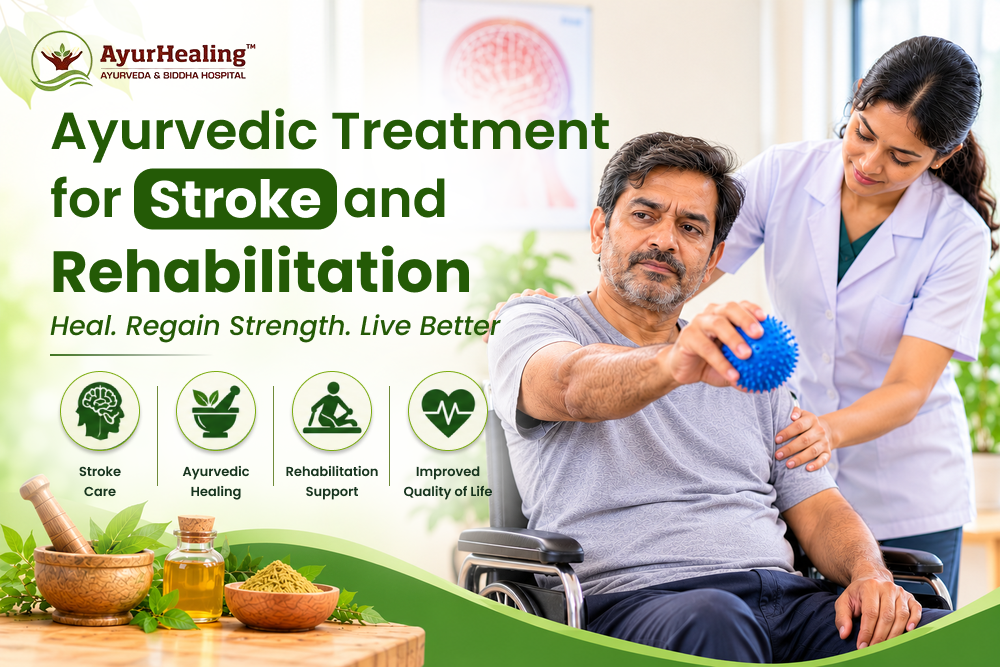
Key Takeaways
- A stroke is a medical emergency. Sudden symptoms require immediate hospital-based assessment.
- Rehabilitation plays an important role in helping survivors improve movement, communication and everyday function.
- Pakshaghata is a traditional Ayurvedic concept, not an exact medical diagnosis for every type of stroke.
- Abhyanga, Basti and Swedana are traditional therapies, not established cures for stroke-related brain damage.
- Herbal preparations require careful review because they may interact with prescribed medication.
- Anxiety and other emotional changes after stroke deserve appropriate assessment and care.
- Managing blood pressure, diabetes and cholesterol is important for long-term health and stroke prevention.
- Family support, professional guidance and a consistent rehabilitation plan can help patients manage daily challenges.
A stroke can change someone’s everyday life in a matter of minutes. A person who was previously walking independently, preparing meals or managing household activities may suddenly need help with basic tasks. For families, the change can be difficult to process. Along with medical appointments and rehabilitation sessions, they may find themselves learning how to support a loved one through a very different daily routine.
Stroke recovery is not the same for everyone. Some people gradually regain movement and communication skills, while others continue to experience physical, cognitive or emotional difficulties. The right medical care and a structured rehabilitation programme play an important role in helping patients work towards greater independence.
Many families also explore traditional healthcare approaches during this period. Ayurvedic Treatment for Stroke is one such area of interest, but it is important to understand what Ayurveda may offer as complementary care and where its limitations lie. Ayurvedic therapies must never replace emergency treatment, prescribed medicines or evidence-based stroke rehabilitation.
This guide explains the Ayurvedic perspective on stroke, traditional supportive therapies, rehabilitation requirements and the precautions patients and caregivers should understand before making healthcare decisions.
What Is a Stroke and How Can It Affect Everyday Life?
A stroke occurs when the blood supply to part of the brain is interrupted or when a blood vessel in the brain ruptures. Brain cells need a continuous supply of oxygen and nutrients. When blood flow is disrupted, the affected brain tissue can become damaged, sometimes resulting in lasting difficulties with movement, speech, memory and other functions.
Understanding the Different Types of Stroke
There are two main types of stroke:
1. Ischemic Stroke
An ischemic stroke occurs when a blood clot or blockage prevents blood from reaching part of the brain. It is the most common type of stroke.
2. Hemorrhagic Stroke
A hemorrhagic stroke happens when a blood vessel in the brain ruptures, causing bleeding in or around the brain. The treatment approach differs from that used for an ischemic stroke.
A transient ischemic attack (TIA), sometimes called a mini-stroke, causes temporary stroke-like symptoms because blood flow is briefly interrupted. Even when symptoms disappear, a TIA requires urgent medical assessment because it can be a warning sign of a future stroke.
Common Effects of Stroke
The effects depend on which part of the brain is affected and how extensive the injury is. A person may experience:
- Weakness or paralysis, often affecting one side of the body.
- Difficulty standing, walking or maintaining balance.
- Problems speaking or understanding language.
- Difficulty swallowing food or liquids.
- Changes in memory, concentration or decision-making.
- Emotional changes, including anxiety, frustration or low mood.
These difficulties can affect more than physical movement. Someone may struggle to communicate their needs, feel uncomfortable depending on family members or lose confidence in familiar surroundings. Rehabilitation addresses these challenges through practical exercises, adaptive strategies and professional support.
Recognising Stroke Symptoms: Remember FAST
Stroke symptoms usually appear suddenly. Recognising them quickly and seeking emergency care can make a significant difference.
- F – Face: One side of the face suddenly droops.
- A – Arms: One arm becomes weak or difficult to raise.
- S – Speech: Speech becomes unclear or difficult to understand.
- T – Time: Seek emergency medical help immediately.
Sudden vision loss, severe dizziness or loss of balance can also be warning signs. Do not wait to see whether symptoms improve, and do not attempt massage, home remedies or Ayurvedic treatment during a suspected stroke. Seek emergency medical attention immediately.
How Does Ayurveda Understand Stroke?
Ayurveda has a traditional framework for understanding conditions involving movement, strength and bodily functions. One concept discussed in classical Ayurvedic literature is Pakshaghata, which is traditionally associated with Vata dosha.
Understanding Pakshaghata
In Ayurvedic terminology, Pakshaghata describes a condition involving impaired movement or weakness, often affecting one side of the body. Classical Ayurvedic explanations associate it with disturbances in Vata dosha, which is traditionally connected with movement and bodily activity.
An Ayurvedic practitioner may consider factors such as physical strength, digestion, sleep, dietary habits, medical history and general health when assessing an individual.
However, Pakshaghata should not be treated as an exact medical equivalent of every type of stroke. A modern stroke diagnosis requires neurological assessment and appropriate investigations, such as brain imaging. The Ayurvedic concept does not determine whether a stroke is ischemic or hemorrhagic, nor does it replace a neurological diagnosis.
The Ayurvedic Approach to Individual Well-being
Ayurveda traditionally considers a person’s overall condition rather than looking at one symptom in isolation. During a consultation, a practitioner may discuss daily routines, food habits, sleep, digestion and general physical well-being.
For someone recovering from a stroke, these discussions must also take account of medical conditions, swallowing difficulties, mobility limitations and prescribed medication.
The purpose of any complementary Ayurvedic care should be to support general well-being where appropriate, without interfering with the patient’s medical treatment or rehabilitation plan.
Ayurvedic Treatment for Stroke: Traditional Therapies and Their Limitations
Certain therapies are discussed in traditional Ayurvedic practice for conditions associated with Vata imbalance. However, their use in stroke survivors needs careful consideration.
There is currently insufficient reliable clinical evidence to establish these therapies as treatments that reverse stroke-related brain damage or restore lost neurological functions. They should therefore be considered traditional practices, not proven stroke treatments.
1. Abhyanga – Traditional Ayurvedic Oil Massage
Abhyanga involves applying oil to the body through massage. It is traditionally associated with relaxation and physical comfort.
A stroke survivor may have reduced sensation, muscle stiffness, swelling, fragile skin or difficulty changing position. These factors can make an ordinary massage unsuitable or unsafe.
Before considering Abhyanga, the patient’s treating healthcare professionals should assess whether it is appropriate. The pressure, positioning, treatment area and any skin or circulation concerns need attention. Massage should not be presented as a way to reverse paralysis or repair neurological damage.
2. Basti Therapy in Ayurveda
Basti is a traditional Ayurvedic procedure involving the administration of specially prepared formulations through the rectal route. It has an important place in classical Ayurvedic approaches to Vata-related conditions.
However, Basti is not an established treatment for stroke recovery. It should never be prescribed automatically simply because a person has experienced weakness or paralysis.
A patient’s bowel function, hydration, medical stability, medication and other health conditions must be considered. Any decision about this procedure should involve a qualified practitioner and, where relevant, the patient’s treating medical team.
3. Swedana – Traditional Heat-Based Procedures
Swedana refers to traditional Ayurvedic procedures involving controlled heat or sweating. It may be included in selected traditional treatment approaches.
For stroke survivors, heat-based procedures require particular caution. A person with altered sensation may not recognise excessive heat, while someone with limited mobility may find it difficult to move away from an uncomfortable position.
Swedana should not be treated as a routine part of stroke care. Its suitability must be assessed individually, with patient safety taking priority.
4. Ayurvedic Medicines and Herbal Preparations
Ayurvedic medicines and herbal preparations are traditionally selected according to individual health requirements. However, natural products are not automatically safe for everyone.
Some herbal ingredients may interact with anticoagulants, antiplatelet medicines, blood pressure medication or diabetes treatment. Others may affect bleeding risk, blood sugar levels or liver and kidney function.
Patients should share a complete list of medicines and supplements with their treating doctor and Ayurvedic practitioner. Never stop, reduce or replace prescribed stroke medication with an herbal preparation without medical approval.
Why Rehabilitation Is Essential After a Stroke
Medical treatment addresses the immediate effects of a stroke, but many survivors also need ongoing rehabilitation. Rehabilitation helps people practise skills, adapt to changes and work towards managing everyday activities more independently.
Current stroke rehabilitation guidance supports an individualised, multidisciplinary approach. The rehabilitation team may include doctors, physiotherapists, occupational therapists, speech and language therapists, psychologists and other specialists, depending on the patient’s needs.
Physiotherapy for Movement and Balance
Weakness, reduced coordination and balance difficulties can make walking or standing challenging after a stroke.
Physiotherapy helps patients practise movements and develop strategies suited to their abilities. Depending on the assessment, sessions may include:
- Assisted movement and mobility exercises.
- Balance and coordination training.
- Walking practice and transfer training.
- Strengthening exercises.
- Posture and movement-control activities.
Exercises should be planned and supervised by a trained physiotherapist. The right level of activity depends on the patient’s medical condition and stage of recovery. Unsupervised or strenuous exercise can increase the risk of falls or other complications.
Occupational Therapy for Daily Activities
Recovery is not only about improving muscle strength. Many patients want to return to familiar activities such as dressing, bathing, eating, cooking or using household objects.
Occupational therapy focuses on practising these everyday tasks. An occupational therapist may also recommend changes to the home environment, such as grab rails, safer bathroom arrangements, accessible furniture and suitable mobility aids.
These practical adjustments can help reduce risks and make daily routines more manageable.
Speech and Swallowing Therapy
A stroke can affect the brain areas involved in speaking, understanding language and swallowing.
Speech and language therapists assess communication difficulties and help patients work on speech, language and other communication skills.
Swallowing difficulties need particular attention. Food or liquid entering the airway can lead to aspiration and serious complications, including pneumonia. A swallowing assessment should guide food textures and liquid consistency. Families should not independently change these without professional advice.
Cognitive Rehabilitation and Emotional Support
Some stroke survivors experience difficulty with memory, attention, planning or problem-solving. Others struggle with frustration, anxiety or changes in confidence.
These difficulties can affect participation in rehabilitation and everyday life. Cognitive rehabilitation, counselling and appropriate mental healthcare can help address them.
Ayurvedic Treatment for Anxiety: Understanding Emotional Well-being After Stroke
The emotional effects of stroke are sometimes overlooked because families naturally focus on physical recovery. However, anxiety, low mood, frustration and fear can make the recovery process more difficult.
A person may worry about falling, feel uncomfortable asking for help or become anxious about returning to familiar activities. Changes in communication and independence can add to these concerns.
People searching for Ayurvedic Treatment for Anxiety should understand that anxiety after a stroke deserves proper assessment. A doctor or qualified mental health professional can help identify the cause and recommend suitable care.
Ayurveda may be explored as complementary support for general well-being when appropriate, but it should not replace psychological treatment or prescribed medication. Herbal products also need careful review because of possible interactions with stroke medicines.
Family members can help by listening patiently, encouraging achievable goals and avoiding pressure to recover at a particular speed.
Can Ayurveda and Modern Stroke Rehabilitation Work Together?
Some families wish to explore Ayurveda alongside conventional healthcare. This discussion should take place only after the patient is medically stable and the proposed care has been reviewed for safety.
For example, a patient may continue prescribed medication and physiotherapy while discussing whether a particular traditional practice is appropriate. That does not mean every Ayurvedic therapy is suitable, or that it will improve neurological recovery.
Before introducing complementary care:
- Continue prescribed stroke medication unless the treating doctor changes it.
- Follow the rehabilitation programme recommended by qualified professionals.
- Share details of all medicines, supplements, oils and proposed procedures with the healthcare team.
- Check for possible interactions, side effects and treatment-related risks.
- Make sure additional therapies do not interfere with physiotherapy, swallowing care or other rehabilitation needs.
- Review the patient’s health and progress regularly.
The aim is to avoid conflicting advice and ensure that every part of the care plan serves the patient’s well-being.
Ayurvedic Treatment for Lifestyle Diseases Management and Stroke Prevention
Stroke recovery also provides an opportunity to review long-term health. Conditions such as high blood pressure, diabetes, high cholesterol and certain heart conditions can increase the risk of stroke.
This is where Ayurvedic Treatment for Lifestyle Diseases Management may become part of a wider discussion about healthy routines. Ayurveda traditionally emphasises mindful eating and consistency in daily habits. These principles can be considered alongside evidence-based medical guidance, not instead of it.
Eating for Better Overall Health
A balanced diet can support general health and help manage some stroke risk factors. Depending on individual needs, meals may include:
- A variety of vegetables and fruits.
- Whole grains and fibre-rich foods.
- Appropriate sources of protein.
- Suitable amounts of healthy fats.
- Less excess salt, added sugar and highly processed food.
Dietary needs are not identical for every patient. Someone with swallowing difficulties may need modified food textures or liquid consistency. People with diabetes, kidney conditions or high blood pressure may also need specific dietary advice.
A dietitian and, where necessary, a speech and language therapist can help create a suitable plan.
Building a Sustainable Daily Routine
Rather than making several difficult changes at once, patients and caregivers can work towards a manageable routine.
Useful habits may include:
- Taking prescribed medicines at the recommended times.
- Attending medical and rehabilitation appointments.
- Following the exercise plan provided by the rehabilitation team.
- Maintaining regular sleep and waking times.
- Allowing enough time for rest.
- Avoiding tobacco and following medical advice about alcohol.
Physical activity should always be appropriate to the person’s abilities and medical condition.
The Role of Family Support
In Bangalore, many families balance work responsibilities with caring for a parent or another family member recovering from a stroke. A practical home-care routine can make this responsibility easier to manage.
Keep frequently used items within reach, reduce obstacles that could cause falls and follow the therapist’s recommendations for safe movement and transfers. Caregivers should also ask the rehabilitation team to demonstrate any tasks they are expected to perform at home.
Small improvements, such as helping someone practise a familiar activity safely, can be meaningful. Progress may be gradual, and patients should be encouraged without being compared with others.
When Should You Consult an Ayurvedic Doctor?
An Ayurvedic consultation may be considered when a stroke survivor is medically stable and the family wants to discuss complementary care.
Before starting any therapy, share the patient’s stroke diagnosis, medical history, current symptoms, medication list and rehabilitation plan.
It is reasonable to ask the practitioner:
- What is the purpose of the proposed therapy?
- Is it suitable for someone with this medical history?
- Could it interact with prescribed medication?
- What precautions or side effects should the patient understand?
- Could it interfere with the existing rehabilitation programme?
- What outcomes can realistically be expected?
A responsible practitioner should explain the limitations of traditional treatments, discuss possible risks and avoid promising a cure or guaranteed recovery.
How to Choose the Best Ayurvedic Hospital in Bangalore
Choosing an Ayurvedic healthcare provider requires careful thought, particularly when a patient has a complex medical history. If you are searching for the Best Ayurvedic Hospital in Bangalore, look beyond advertisements and promises of quick recovery.
Consider the following points before making a decision.
1. Check practitioner qualifications
Understand the doctor’s educational qualifications, professional registration and relevant clinical experience. Do not rely only on promotional claims.
2. Look for individual assessment
Treatment recommendations should take account of the patient’s medical history, present health, medication and existing care plan. A standard treatment package may not be appropriate for every person.
3. Ask about safety and hygiene
Understand the procedures being suggested, the precautions involved and the hygiene standards followed. Patients with limited mobility may need additional assistance and suitable arrangements.
4. Understand coordination with other healthcare professionals
Stroke survivors may continue to need care from neurologists, rehabilitation physicians, physiotherapists, speech therapists and other specialists. Complementary Ayurvedic care should not disrupt these arrangements.
5. Ask for transparent treatment information
A trustworthy provider should explain the purpose, limitations, possible risks and costs of proposed therapies. Be cautious of anyone guaranteeing a cure or asking patients to discontinue prescribed medication.
6. Consider follow-up and communication
Patients and caregivers should receive clear instructions and know whom to contact if they have concerns about a procedure or a change in health.
For families comparing options in Bangalore, a provider who encourages informed decisions and respects conventional medical care is a more responsible choice than one making unrealistic recovery promises.
Conclusion: Making Informed Choices for Stroke Recovery
Life after a stroke can involve many adjustments for both the patient and the family. Relearning everyday activities, attending rehabilitation sessions and managing ongoing health conditions require patience and consistent support.
Ayurveda offers a traditional perspective on health and well-being, and certain practices may be discussed as complementary care when medically appropriate. However, no Ayurvedic therapy should be presented as a substitute for emergency stroke treatment, prescribed medication or evidence-based rehabilitation.
At Ayurhealing, we believe responsible healthcare starts with understanding the individual. Our approach to personalised Ayurvedic and Siddha healthcare considers a person’s health concerns and individual requirements under the guidance of qualified practitioners. Anyone considering complementary care after a stroke should first discuss treatment suitability and safety with the relevant healthcare professionals.
If you are exploring the Best Ayurvedic Hospital in Bangalore, take time to understand the practitioner’s qualifications, the proposed treatment and how it fits with your existing medical care.
Contact Ayurhealing to learn more about our approach to personalised Ayurvedic healthcare and discuss your healthcare requirements with our team.